

In early 2024, I stood in my kitchen clutching a receipt for three bags of groceries that cost me $112. My bank account balance was a measly $14.12. I was working 50 hours a week at a job that drained my soul, yet I was still losing the war against inflation. I realized that traditional budgeting was failing me because it felt like a chore. I didn’t need a spreadsheet; I needed a game.
By March 2026, the economic landscape has only gotten tighter. AI-driven marketing is more aggressive, and the cost of living continues to climb. However, I have found a way to save over $15,000 in the last two years without getting a massive raise. The secret wasn’t magic—it was gamification. I started using money saving challenges to turn my financial life from a source of stress into a competitive sport.
This guide is the most comprehensive resource for money saving challenges in 2026. We will explore fifteen distinct strategies, from the famous 52 week savings challenge 2026 to the controversial loud budgeting movement. Whether you want to build an emergency fund or finally buy a home, these challenges are your roadmap. Let’s look at the tools, the math, and the psychological shifts you need to win.
1. The Traditional 52-Week Savings Challenge 2026

The 52 week savings challenge 2026 is the gold standard for beginners. It works on the principle of incremental growth. In week one, you save $1. In week two, you save $2. By week 52, you are saving $52. By the end of the year, you have a total of $1,378.
Most people fail this challenge because they start it in January and forget by March. In 2025, I modified this by automating the transfer every Friday morning. If you wait until the end of the week, the money is usually gone. I use Ally Bank because their “buckets” feature allows me to label my savings specifically for this challenge.
If you are an intermediate saver, try the “Reverse” version. Start with $52 in week one when your motivation goals are highest. By December, when holiday spending peaks, you are only saving $1. This is one of the best money saving challenges for anyone prone to “shiny object syndrome.” You can learn more about initial setup in my how to budget for beginners guide.
2. The 1p Savings Challenge 2026
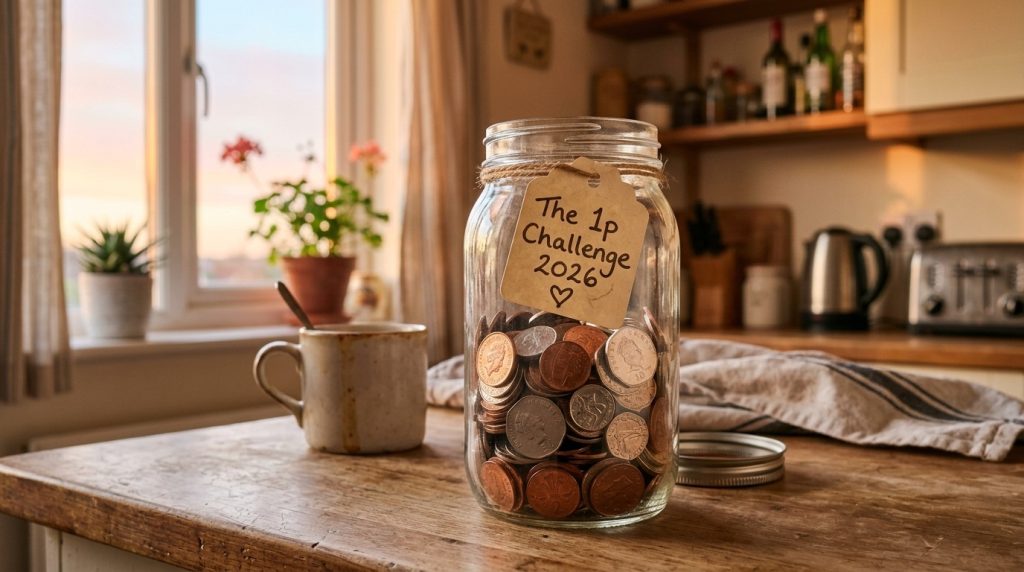
The 1p challenge 2026 is the ultimate “no-excuses” method. You start by saving 1 penny on January 1st. On January 2nd, you save 2 pennies. By December 31st, you are saving $3.65. This adds up to a surprising $667.95 in a single year.
I once coached a resident doctor named Anwar who was working 60-hour weeks. He felt he had no time to manage money. We set up the 1p challenge 2026 using the Monzo app and the IFTTT integration. It moved the money daily without him ever thinking about it. He used the final $667 to fund his first Roth IRA contribution.
This challenge is perfect for teaching kids about compound interest and the power of small habits. It proves that wealth building isn’t just for high earners. If you are struggling with a low income, this is your starting line. Check out my emergency fund guide for how to pair this with a larger safety net.
3. Loud Budgeting: The 2026 Transparency Movement

Loud budgeting is the most controversial of all money saving challenges in 2026. Instead of quietly declining expensive dinners, you tell your friends exactly why you aren’t going. “I’m not coming to brunch because I have a $500 goal for my house down payment this month.”
I started loud budgeting last year on social media. It was terrifying at first. I felt like a “cheapskate.” But a funny thing happened: my friends started doing it too. We replaced $100 dinners with $10 potlucks. We stopped trying to impress people we didn’t like with money we didn’t have.
This is a money mindset shift that fights lifestyle creep. It removes the shame from being frugal. If you want to achieve financial freedom, you must stop caring about the “highlight reel” of others. Read my financial freedom roadmap for more on social boundaries and money.
4. The No-Spend Challenge 2026
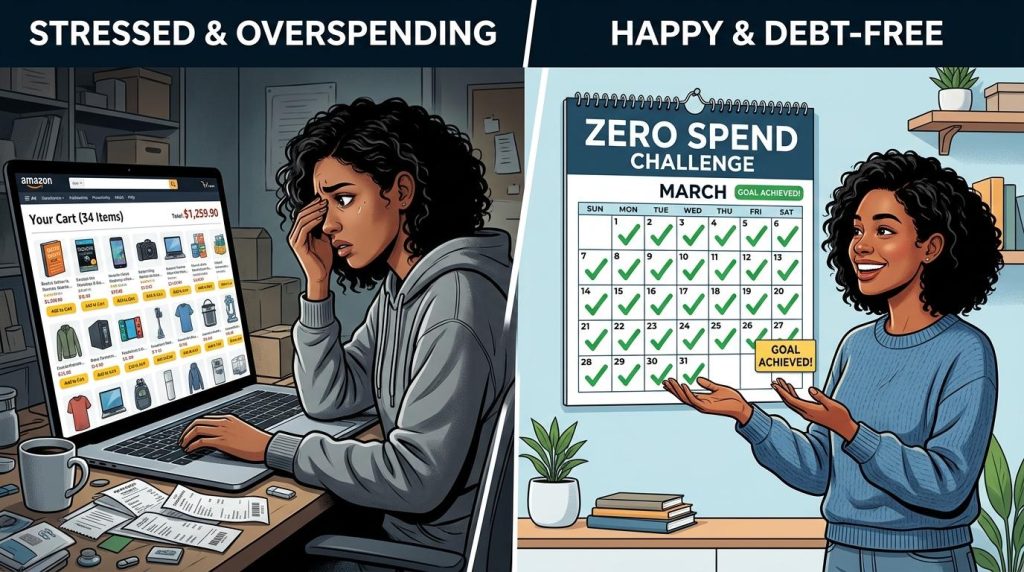
The no spend challenge 2026 is a total system reset. You commit to spending zero dollars on non-essentials for a set period. I recommend starting with a “No-Spend Weekend,” then moving to a week, and eventually a full month.
In 2024, I did a 30-day no-spend month. I was only allowed to pay for rent, utilities, and a strict grocery list. I realized I was spending $400 a month on “small” Amazon orders and apps I didn’t use. Cutting that out felt like a massive raise.
To win, you must identify your triggers. Are you a “boredom scroller”? Delete the shopping apps. Are you a “stress eater”? Meal prep on Sundays. This challenge is the best way to find your financial motives. See how to get out of debt for how I used my no-spend month to kill my car loan.
5. The Round-Up Savings Challenge

The round up savings challenge is the “set it and forget it” champion of 2026. Every time you buy something for $4.50, your bank rounds it up to $5.00 and puts the 50 cents into a high yield savings account.
I use Chase and Acorns for this. Last year, my round-ups alone saved me $1,100. It is “invisible” saving. You don’t feel the impact on your disposable income, but the results at year-end are massive. It is the perfect savings challenge guide entry for busy professionals.
In 2026, many apps also offer a “multiplier” feature. You can set it to round up and then double or triple that amount. This is a pro-level money management move. For more on the best tools, check my best money apps review.
6. The Cash-Only Month Challenge
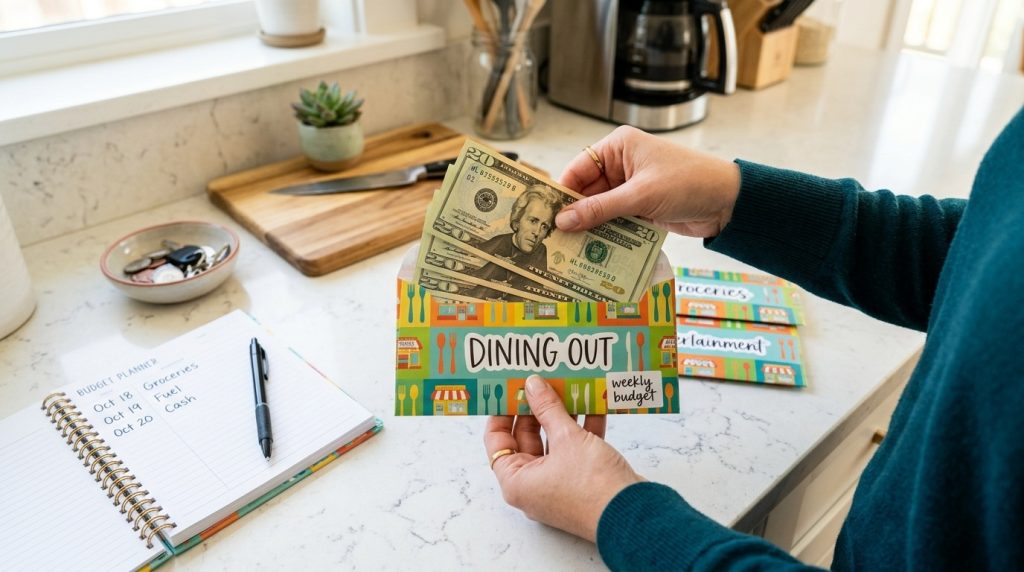
The cash only month challenge is designed to break your addiction to “digital friction.” It is too easy to tap a phone and forget you spent $20. When you have a physical $20 bill in your hand, you feel the “pain” of the purchase.
I did this in November 2025. I took out my entire monthly budget in cash and put it into labeled envelopes. When the “Dining Out” envelope was empty, the restaurant was closed for the month. I saved $350 simply by being forced to look at my money.
This is a foundational part of zero-based budgeting. It teaches you the difference between a “want” and a “need.” If you are a chronic overspender, this is the most important of all money saving challenges. Read how to budget for beginners for the envelope breakdown.
7. The Weekly Weather Savings Challenge

The weather based savings challenge is a fun way to gamify your week. Every Wednesday morning, you check the high temperature for your city. That temperature is the amount you must save that week.
If it’s 65 degrees, you save $65. If you live in a hot climate like Karachi or Phoenix, this challenge can get aggressive fast! It adds an element of surprise to your savings plan. It keeps you engaged with your bank account every single week.
I find that this challenge works best for people who find traditional saving boring. It turns Mother Nature into your financial coach. If the temperature is too high for your budget, just save half. The goal is consistency, not perfection. See my financial freedom roadmap for more creative ideas.
8. The 100 Envelope Challenge
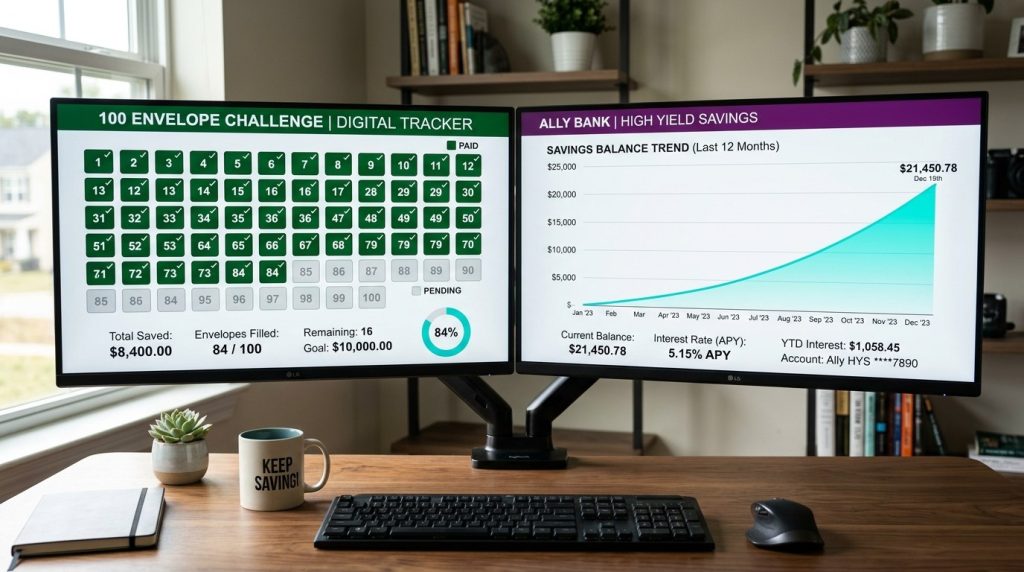
The 100 envelope challenge is a high-intensity sprint. You label 100 envelopes from 1 to 100. Every day (or twice a week), you pull an envelope at random and put that amount of cash inside. If you complete all 100, you save $5,050.
In 2024, my sister used this to save for her wedding. She realized she was wasting $50 a day on “convenience” items. By redirecting that cash to the envelopes, she hit her goal in six months. It is one of the best money saving challenges for high-impact goals.
If you don’t use cash, you can digitize this using a simple saving money chart on your phone. Every time you move money, cross off a number. For a list of more aggressive sprints, check my emergency fund guide.
9. The Subscription Rotation Challenge
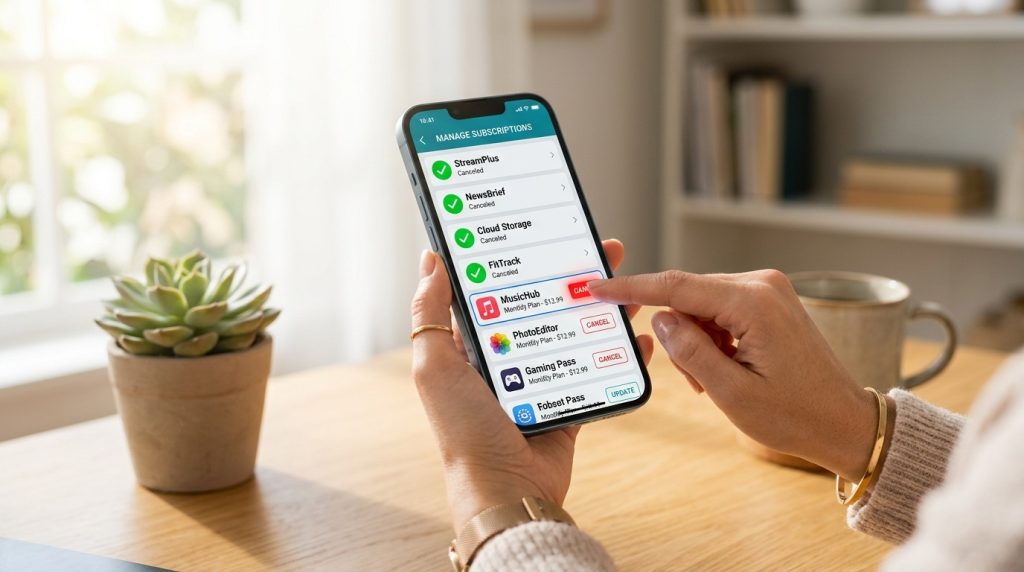
In 2026, “subscription fatigue” is real. Most families spend over $150 a month on streaming, apps, and memberships. The subscription rotation challenge forces you to cancel everything and only have one active service at a time.
I rotate through Netflix, Hulu, and Disney+. I watch what I want for a month and then cancel it for the next one. This habit saved me $900 last year alone. It is a simple way to increase your disposable income with zero effort.
Use an app like Rocket Money to find all those “hidden” charges you forgot about. This is a key part of managing your money in the digital age. For more on cutting digital leaks, read how to get out of debt.
10. The $5 Bill (or Fiver) Challenge

This is a classic new year savings challenge. Every time you receive a $5 bill in change, you are forbidden from spending it. It must go into a dedicated jar or a separate savings account.
I once did this for a full year and saved $2,400. It felt like I was collecting trading cards. The $5 bill is small enough not to wreck your day, but large enough to add up fast. It is one of the most popular money saving challenges on TikTok for a reason.
If you rarely use cash, set your bank app to transfer $5 to savings every time you use your debit card. This creates the same effect in a digital world. Check my stock market investing for beginners for how to grow that “fiver” money.
11. The “Match Your Vices” Challenge
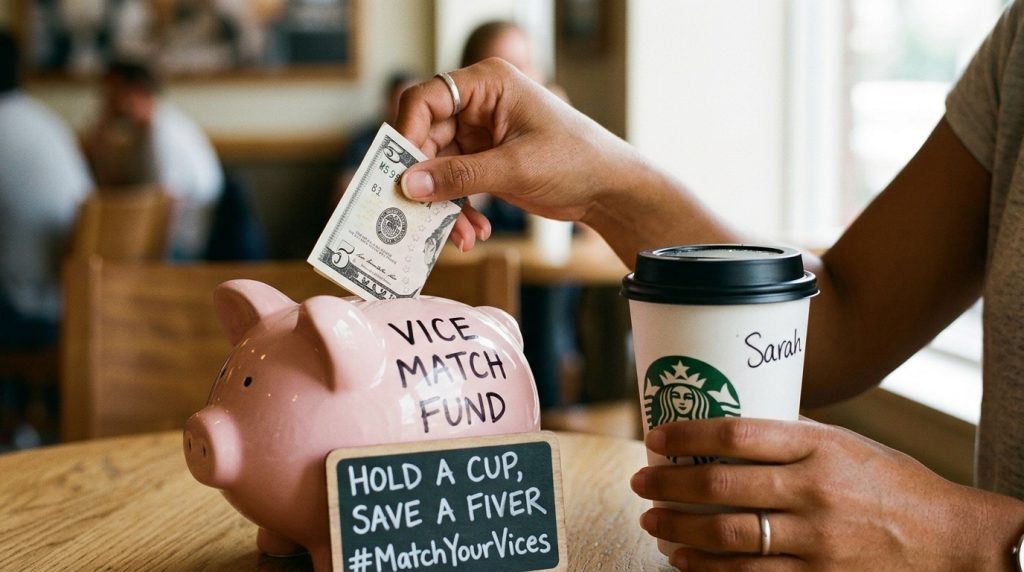
This is a psychological masterstroke. Every time you spend money on a “vice”—like an expensive latte, a pack of cigarettes, or a night at the bar—you must put an equal amount into your high yield savings account.
In 2024, I realized my $7 daily coffee was actually costing me $14. The “pain” of the $7 savings transfer made me reconsider the coffee. I didn’t stop drinking coffee, but I started making it at home five days a week. My bank account grew by $1,800.
This challenge helps you identify the sunk cost fallacy in your daily habits. It turns your bad habits into wealth building opportunities. Read more about habit formation in my financial freedom roadmap.
12. The Pantry Challenge: “Project Pan”

Food waste is a financial crime. The pantry challenge requires you to eat everything in your cupboards and freezer before you buy new groceries. You are only allowed to buy “perishables” like milk and eggs.
I did “Project Pan” for two weeks last March. I found three boxes of pasta and a bag of frozen shrimp I had forgotten. I saved $250 on my grocery bill that month. It forces you to be creative and appreciative of what you already have.
Pair this with a money saving challenges tracker to see how much you save. It is a great way to boost your financial wellness during a tight month. Check how to save money on groceries for my exact pantry staple list.
13. The 1% Retirement Sprint

Most people think they can’t afford to save for retirement. The 1% retirement sprint challenges you to increase your 401k or Roth IRA contribution by just 1% today. Then, you must find that 1% in your budget to cut.
If you earn $5,000 a month, 1% is only $50. That is two skipped dinners out. In 2026, the power of that extra 1% over thirty years is worth hundreds of thousands due to compound interest. It is the most high-leverage move you can make.
Don’t wait for a raise to save. Save now and adjust your life to fit. This is the heart of financial independence. For a guide on where to start your investments, read stock market investing for beginners.
14. The “Wait 48” Rule Challenge

One-click ordering is the enemy of a simple budget. The wait 48 rule challenge requires you to wait 48 hours before buying anything that isn’t on your grocery list. Add it to your cart, but do not click “checkout.”
I found that 80% of the time, I didn’t actually want the item after two days. The “dopamine hit” of the click faded, and my logic returned. This habit saved me $4,000 last year. It is one of the most effective money saving challenges for the modern era.
This challenge helps you identify emotional spending patterns. If you find yourself “shopping to feel better,” you need a new stress relief tool. See how to budget for beginners for more on managing impulses.
15. The Birthday & Milestone Challenge

Every time someone in your family has a birthday, or you hit a work milestone, you must save or donate a specific amount. I save $10 for every year of the person’s age. If my son turns 10, I save $100.
This challenge links your financial goals to the people you love. It reminds you why you are saving. It also works as a sinking fund for future gifts. It is a beautiful way to practice financial wellness as a family.
In 2026, I also started the “Community Hero” variation. Every time I hit a savings milestone, I donate $10 to a local food bank. Giving back keeps your ego in check and your heart open. Read my financial freedom roadmap for more on legacy building.
🔹 Comparison Table: 2026 Best Money Saving Challenges
| Challenge | Effort | Savings Potential | Best For |
| 52-Week Challenge | Low | $1,378+ | Beginners |
| 1p Challenge | Very Low | $668 | Low Income |
| 100 Envelope | High | $5,050 | Wedding/Home Fund |
| No-Spend Month | Extreme | $500 – $2,000 | Habit Reset |
| Round-Ups | Zero | $500 – $1,500 | Busy Pros |
| Loud Budgeting | Medium | Variable | Social Butterflies |
Frequently Asked Questions
Which money saving challenge is best for beginners in 2026?
The 52 week savings challenge 2026 is the best starting point. It builds the “saving muscle” gradually. You don’t feel the pinch until later in the year, which helps you stay committed. Pair it with an automated bank transfer for a 90% success rate. Check how to budget for beginners for help.
How can I save money if I have a low income?
Start with the 1p challenge 2026. Saving one penny on day one is something anyone can do. As the challenge progresses, use money making hacks like selling old clothes or taking on a side hustle to cover the larger days. Every little bit counts toward your emergency fund. See best side hustles to start now.
Does loud budgeting really work?
Yes. Loud budgeting works by using social accountability. When you tell people you are saving, you remove the social pressure to spend. It is a powerful way to fight FOMO (Fear of Missing Out). It turns your financial goals into a public commitment. Read financial freedom roadmap for more.
What is the fastest way to save $5,000?
The 100 envelope challenge is the fastest method if you have the discipline. By saving an average of $50 a day, you hit the goal in 100 days. If that is too aggressive, try combining a no spend month with a high-impact side hustle. Check how to get out of debt for speed tactics.
Are round-up apps safe to use?
Yes, apps like Monzo, Chase, and Acorns use bank-level encryption and are highly regulated. They are a safe and effective way to build wealth in the background. Always ensure you have two-factor authentication (2FA) enabled. See my best money apps guide for more.
Final Thoughts on 2026 Wealth Building
Winning with money in 2026 is an endurance race, not a sprint. The world wants you to spend, but your future self wants you to save. By picking just one of these money saving challenges, you are taking a radical stand for your freedom.
Don’t try to do all fifteen at once. Pick the one that fits your current life stage. If you are broke, start the 1p challenge. If you are comfortable but bored, try the 100 envelope challenge. The only way to fail is to never start. You have the tools, the math, and the roadmap. Now, go win.