

Last Tuesday at 6:45 AM, I stood in a line of fourteen people at the local cafe. The air smelled like burnt beans and impatience. I watched the barista slide a $7.50 latte across the counter. That was the moment I realized my morning ritual was costing me nearly $200 a month in money and hours of wasted time. I decided to reclaim my kitchen corner. Building a dedicated space for caffeine isn’t just about aesthetics. It is a strategic move for your morning sanity and your long-term savings. Do you find yourself overspending on mediocre takeout brews? Is your kitchen counter a cluttered mess of sugar pods and stray spoons? Are you ready to transform a neglected nook into a high-end experience? I have spent months researching and testing these setups. This guide offers the ultimate blueprint for your home caffeine sanctuary.
Executive Summary
This guide provides a comprehensive roadmap to designing a professional-grade beverage station without a major renovation. You will discover how to repurpose existing furniture and utilize vertical space to create a station that rivals your favorite boutique shop. We cover 23 distinct design strategies ranging from rustic reclaimed wood carts to sleek minimalist built-ins. Most of these projects cost between $50 and $200, yet they contribute to a documented savings of $1,500 annually by eliminating daily cafe runs. In my experience, the secret lies in workflow and accessibility. We will explore specific tools like the Breville Barista Express and clever organizational hacks using IKEA Råskog carts. You will gain the confidence to build a station that fits your specific square footage while elevating your daily routine.
1. Rustic Floating Shelves

Open shelving creates an immediate visual anchor for your Homemade Coffee Station. In my experience, using thick cedar planks from a local lumber yard adds a warmth that store-bought laminate cannot match. I spent $45 on raw wood and heavy-duty iron brackets to create a three-tier system in my own dining room. This setup allows you to display your favorite mugs and canisters while keeping the counter clear. Use a level during installation to ensure your espresso doesn’t slide. A common mistake is using weak drywall anchors. Always mount your brackets directly into the wall studs to support the weight of heavy ceramic jars.
2. Reclaimed Wood Cart

A mobile station offers flexibility for small apartments. I have noticed that old microwave stands or vintage bar carts can be easily sanded and stained to create a high-end look. Look for brands like Vasagle for affordable metal frames that you can customize with your own wooden tops. This approach typically takes about three hours of labor on a Saturday. It provides a dedicated zone for your Diy Espresso Bar without taking up permanent real estate. Ensure the wheels have locking mechanisms. I once saw a grinder vibrate a cart right across a hardwood floor because the casters were not secured.
3. Built-In Kitchen Nook

Converting a small desk area or an unused pantry shelf is a smart way to integrate your setup. Most modern kitchens have a “command center” desk that usually just collects mail. By removing the lower drawers, you create a perfect spot for a Diy Kitchen Coffee Bar. I recently helped a friend install a small butcher block remnant in her kitchen desk area for $60. It transformed the space into a functional zone. This setup requires almost zero new floor space. Be careful with steam from your machine. Ensure there is enough vertical clearance to prevent moisture damage to the underside of the upper cabinets.
4. Hidden Cabinet Station

If you prefer a clutter-free look, a hidden station inside a pantry or tall cabinet is ideal. You can use pull-out trays to bring the machine forward when in use. I’ve tried this with a standard 24-inch wide kitchen cabinet and it works beautifully for keeping the Diy Home Coffee Bar out of sight. It keeps the visual “noise” of cords and sugar bags hidden. One practical action is to install a power strip inside the cabinet. The cost of a heavy-duty slide-out shelf is usually around $70. The catch is ensuring proper ventilation. Machines produce heat and steam, so leave the doors open while brewing.
5. Vintage Dresser Conversion

An old bedroom dresser can be a goldmine for storage. You can store bulk beans, back-stock filters, and seasonal syrups in the drawers. I once found a solid oak dresser at a thrift store for $30 and painted it a deep forest green. It became the centerpiece of the room. This provides a large surface area for multiple brewing methods like Chemex and French Press. It also offers a huge amount of hidden storage. Ensure the height is comfortable for your back. Most dressers are 30 inches high, but you might need to add taller legs for a more ergonomic 36-inch counter height.
6. Minimalist Countertop Setup

You do not always need new furniture to create a designated zone. A simple decorative tray can define the space on your existing counter. I recommend a marble or slate tray to catch spills and protect your countertops. Brands like West Elm offer beautiful options, but a $15 Target tray works just as well. This is the fastest way to organize a Small Home Coffee Station. The action here is to group your essentials together to create a visual boundary. Don’t crowd the space. If you have more than five items, it starts to look like clutter rather than a curated station.
7. Industrial Pipe Rack

Using black iron pipes for shelving gives a modern, edgy feel to your space. You can buy these pipes at any hardware store and assemble them like Legos. I have seen this work exceptionally well in loft-style apartments. It is incredibly sturdy and can hold heavy professional grinders like the Baratza Sette. The materials for a two-shelf rack usually run about $80. Use a clear coat of spray paint on the pipes to prevent rusting over time. A common mistake is forgetting to degrease the pipes before assembly. They often come coated in oil from the factory.
8. Farmhouse Sideboard Buffet

A long sideboard provides enough room for a full beverage service, including tea and hot cocoa. This is perfect for families who have different morning preferences. I’ve noticed that placing a large mirror behind the buffet makes the whole station feel like a professional cafe. You can find these pieces at furniture outlets or FB Marketplace for under $150. It creates a dedicated hospitality zone for guests. The only trade-off is the footprint. This requires a larger wall in your dining or living area. Measure your wall twice before committing to a large buffet piece.
9. Under-Stair Espresso Bar

That awkward space under your stairs is often wasted. Converting it into a built-in bar is a high-impact design choice. I saw a homeowner use this space for a Diy Espresso Bar by adding a small countertop and a custom backsplash. It feels like a secret alcove. This project is more advanced and might require a contractor for electrical work. The cost can vary from $200 to $500 depending on the finishes. Ensure you have adequate lighting. Most under-stair areas are dark, so adding LED strip lights under the shelves is a mandatory step for functionality.
10. Repurposed Closet Nook

Removing the doors from a small hallway closet can create a recessed station. This is a brilliant way to save space in a tight apartment. I’ve seen people add shiplap to the back of the closet to create a cozy texture. It defines the Homemade Coffee Station as its own “room” within a room. The cost for paint and a few shelves is usually under $100. This setup keeps the workflow out of the main kitchen traffic. Just remember to check the depth. Most machines need at least 15 inches of clearance to fit properly with their water reservoirs.
11. Chalkboard Wall Feature

Painting the wall behind your station with chalkboard paint allows for creative expression. You can write the “daily special” or keep track of your bean inventory. I’ve used Rust-Oleum chalkboard paint for $20 and it transformed a boring wall into an interactive menu. It adds a playful, authentic cafe vibe to your home. Make sure to use high-quality chalk or liquid chalk markers to avoid a dusty mess near your machine. One common mistake is not priming the chalkboard surface. You must rub a piece of chalk sideways over the entire wall and erase it before your first use.
12. Mid-Century Modern Console

A sleek console table with tapered legs adds a touch of elegance to your beverage corner. This style works well in living rooms where the station needs to look like a piece of high-end furniture. I recommend looking for brands like Article or West Elm for inspiration, then finding replicas at discount stores. This setup is perfect for a Diy Coffee Cabinet look without the bulk. It provides a sophisticated backdrop for your pour-over equipment. These tables can be narrow, so check that your machine’s base doesn’t overhang the edge. Stability is key for a heavy espresso machine.
13. Corner Floating Desk

A small corner can be maximized with a triangular floating shelf. This is the ultimate Small Home Coffee Station solution for studio apartments. I’ve installed these for friends using simple brackets and a piece of plywood cut to size. It costs about $30 in materials. It utilizes a corner that would otherwise be dead space. The action here is to keep the setup vertical. Use wall-mounted hooks for mugs to save the limited surface area. Be mindful of the weight limit of your brackets. A full water tank and a metal machine can be heavier than you think.
14. Rolling Bar Cart
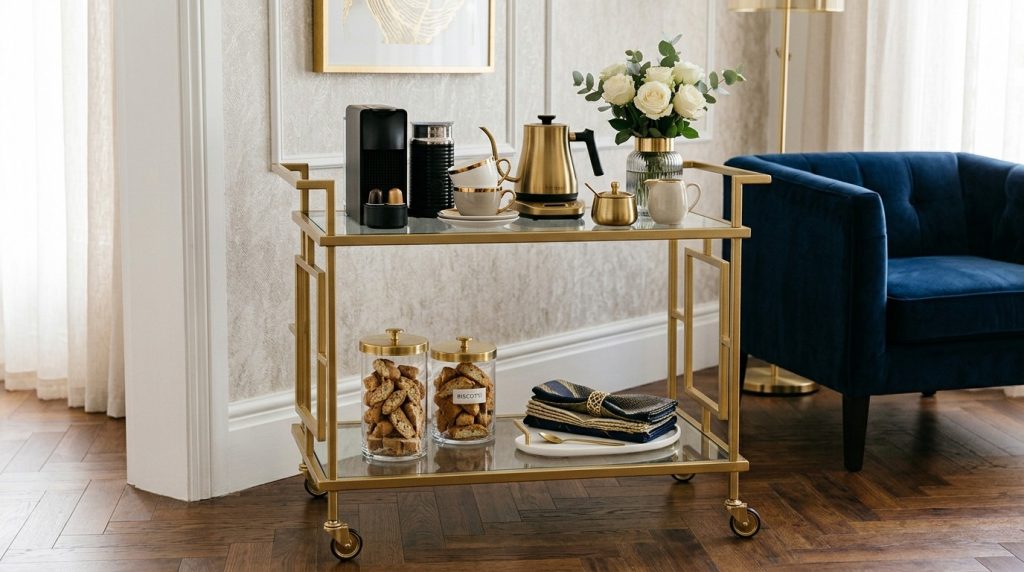
The classic bar cart is a staple for a reason. You can move it to the dining table for brunch or back to the kitchen for the morning rush. I’ve noticed that gold or brass carts add a “glam” feel to the ritual. Brands like Target’s Threshold line offer great options for around $100. It is a flexible Homemade Coffee Station that grows with your needs. The trade-off is the lack of storage for larger items. You will need to be selective about what you keep on the cart. Focus on the essentials: the machine, two mugs, and a bean canister.
15. Vertical Pegboard Organizer

Using a pegboard allows you to hang everything from milk frothers to measuring spoons. This is a very practical Coffee Station Diy project. I use the IKEA Skådis pegboard system because the accessories are interchangeable. For about $40, you can have a fully customizable wall. It keeps everything within arm’s reach while you brew. This is especially helpful for people who use multiple accessories like scales and portafilters. The catch is the visual look. If not organized neatly, a pegboard can look cluttered. Stick to a specific color palette for your accessories to keep it looking sharp.
16. Window Sill Bar
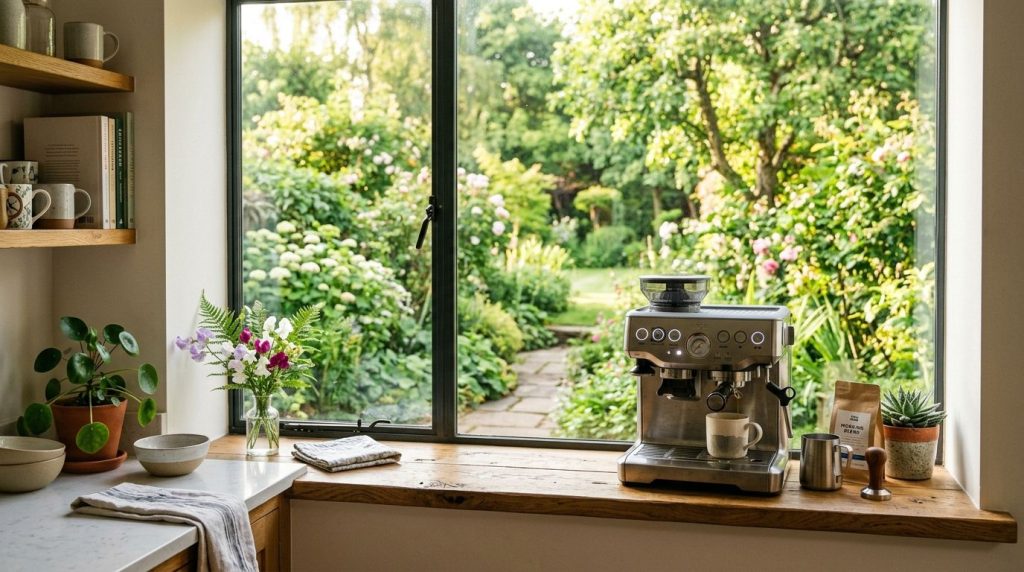
If you have a wide window sill, you can turn it into a scenic brewing spot. I’ve seen this work in kitchens with deep garden windows. It provides natural light for your morning routine. This is a zero-cost furniture option if the space already exists. It creates a serene environment to start your day. However, you must be careful about temperature fluctuations. Extreme cold or heat from the window can affect your machine’s performance. I recommend using a thick silicone mat to insulate the machine from the sill surface.
17. Upcycled Palette Rack

For a truly budget-friendly option, a wooden shipping palette can be turned into a rustic mug rack and shelf. I have found palettes for free behind local stores and converted them with just a saw and some nails. It is a classic Coffee Station Diy favorite because it costs almost nothing. It adds an organic, handmade feel to your space. Sand the wood thoroughly to avoid splinters. You should also seal the wood with a water-resistant clear coat. Palette wood is very porous and will soak up every coffee splash if it is not protected.
18. Sliding Barn Door Cabinet

If you have a wall niche, adding a sliding barn door can hide your station when guests arrive. This is a popular choice for farmhouse-style homes. I’ve noticed this adds a “wow” factor to the room. The hardware kit for the door is usually around $60, plus the cost of the wood. This creates a dedicated Diy Coffee Cabinet that is both functional and decorative. It protects your equipment from dust when it is not in use. The installation requires some DIY skill to ensure the track is level and the door slides smoothly without sticking.
19. Mirrored Glam Station

Placing a large mirror or mirrored tiles behind your counter creates the illusion of a much larger space. It reflects the light and makes the station feel bright and airy. I’ve used inexpensive mirror tiles from a craft store for $25 to create a custom backsplash. This is perfect for dark kitchen corners that need a boost. It makes your Diy Espresso Bar feel like a luxury hotel setup. The downside is maintenance. You will need to wipe away steam spots and splashes frequently. Use a microfiber cloth and a vinegar solution to keep the shine without streaks.
20. Shiplap Backdrop Display

Adding horizontal white boards to the wall creates a clean, classic background. It makes your mugs and colorful canisters pop. I recently installed a small shiplap accent wall for a client’s beverage zone for about $50 in materials. It defines the area without needing extra furniture. It is a timeless look that fits many decor styles. Use “nickel gap” spacing for a professional appearance. A common mistake is using boards that are too thick, which can make the space feel smaller. Stick to 1/4-inch plywood strips for a subtle, high-end effect.
21. Copper Pipe Accents

Using copper for your mug hooks or shelf supports adds a warm, metallic glow. I’ve noticed that copper pairs beautifully with dark navy or charcoal walls. You can buy copper tubing and simple fittings at the hardware store for a few dollars each. This gives your Diy Home Coffee Bar a custom, artisanal look. Over time, the copper will develop a natural patina, or you can keep it polished. The catch is the price of copper, which can fluctuate. If you are on a tight budget, look for copper-colored spray paint to achieve the same visual effect on cheaper materials.
22. Floating Glass Shelving

Glass shelves create a modern, weightless look that is perfect for small rooms. They don’t block the light, making the station feel integrated into the wall. I’ve seen this work perfectly in contemporary kitchens with a minimalist Diy Kitchen Coffee Bar. High-quality tempered glass shelves usually cost around $40 each. They are very easy to clean with standard glass cleaner. The trade-off is the visibility of dust. Every speck will show on glass, so you will need to do a quick wipe-down once a week. Also, ensure the brackets are rated for the weight of your glassware.
23. Fold-Down Wall Desk

For the ultimate space-saving hack, a wall-mounted desk that folds down provides a temporary workspace. I’ve recommended these for people living in tiny homes or dorms. When you are finished brewing, you simply fold the “counter” back up against the wall. You can find these for about $60 online. This is the most efficient way to have a Small Home Coffee Station without losing any permanent floor space. The action here is to keep your equipment lightweight. Use a compact machine like a Nespresso or an AeroPress. A heavy semi-automatic machine will be too much for most folding mechanisms.
Frequently Asked Questions
How much can I really save with a home station?
The math is surprisingly simple and persuasive. A standard latte at a chain cafe now averages $5.50 to $7.00. If you buy one every workday, you are spending roughly $130 to $150 per month. By investing in a Homemade Coffee Station, your cost per cup drops to approximately $0.50 for high-quality beans and milk. Over the course of a year, this results in a direct saving of over $1,500. Even after the initial cost of a machine and a grinder, most people see a full return on their investment within four to six months. In my experience, the quality of your home brew often exceeds the cafe once you master the technique.
What is the best machine for a beginner?
I always suggest starting with a machine that balances ease of use with quality output. For those interested in a Diy Espresso Bar, the Breville Bambino is an excellent entry-level choice. It heats up in seconds and fits into the Small Home Coffee Station footprint perfectly. If you prefer a simpler approach, a high-quality drip machine like the Moccamaster provides cafe-level gold cup standards with one-button simplicity. I have seen many people waste money on “all-in-one” machines that break quickly. It is better to buy a dedicated machine and a separate grinder for longevity and better flavor.
How much space do I need for a setup?
You can create a functional zone in as little as two square feet. A standard 24-inch wide counter or a small 18-inch deep cart is plenty of room for a machine, a grinder, and a small tray of accessories. The secret to success in tight quarters is utilizing vertical space. Use wall-mounted mug racks or floating shelves to keep the surface clear for the actual brewing process. I have noticed that even a corner of a kitchen table can be partitioned off to serve as a dedicated station. Measure your machine’s footprint before buying furniture to ensure a proper fit.
Do I need a plumber to install a station?
Most residential setups do not require any plumbing. Almost all home espresso machines and brewers come with a removable water reservoir that you fill manually. This allows you to place your station anywhere—in a dining room, an office, or even a bedroom nook. If you are building a high-end Diy Kitchen Coffee Bar and want a “plumbed-in” machine, you will need a professional to run a water line. For 95% of home users, a tank-based system is more than sufficient and much more flexible for future decor changes.
How do I hide the messy power cords?
Cord management is the difference between a cluttered counter and a professional look. I recommend using adhesive cord clips or “J” channels along the back of your furniture to tuck wires out of sight. You can also use a decorative box with a hole cut in the back to house a power strip. I’ve noticed that simply grouping cords together with Velcro ties makes a significant visual improvement. For built-in setups, many people choose to drill a small hole in the countertop (a “grommet”) to feed the cords directly to an outlet under the counter.
Conclusion
Building your own beverage sanctuary is one of the most rewarding home projects you can undertake. It provides a daily moment of peace and a significant boost to your annual savings. I’ve seen how small changes, like adding a dedicated cart or a few floating shelves, can completely transform a morning routine from a rushed chore into a mindful ritual. Whether you choose a rustic palette rack or a sleek mid-century console, the goal is to create a space that reflects your style and serves your needs. I encourage you to try one of these Coffee Bar Ideas this weekend and see the difference for yourself. Save this post to your Pinterest board, pick your favorite design, and start building your dream cafe today. Your future self (and your bank account) will thank you.