A standard 4×8 foot sheet of drywall needs about 28 to 32 screws when hung horizontally on walls, spaced 12 inches apart along studs set 16 inches on-center. For ceilings or larger 4×12 foot sheets, plan on roughly 36 to 48 screws to meet code and stop sagging over time.
Guessing at fastener counts is how DIYers end up with three trips to the hardware store — or a ceiling that pops loose in a year. Below is a complete breakdown by sheet size, wall vs. ceiling spacing, hanging orientation, and a simple calculator formula so you can order exactly what you need.
Quick Answer: Screws Per Sheet Cheat Sheet
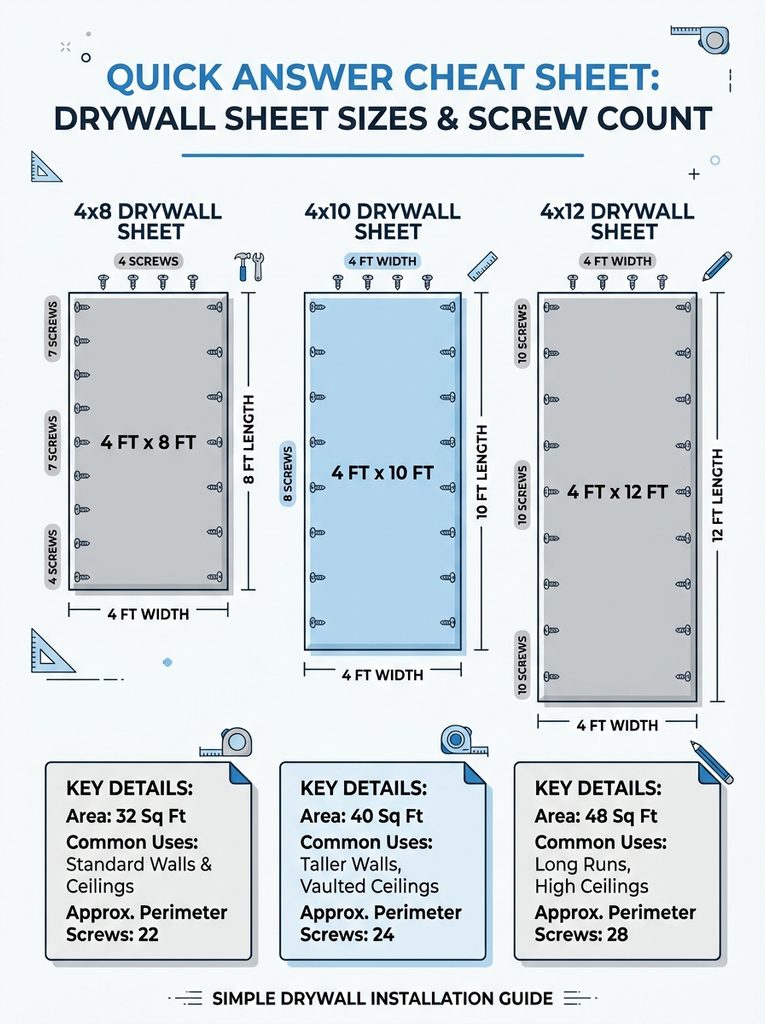
Here’s the fast reference before we get into the details:
| Sheet Size | Wall Installation | Ceiling Installation |
|---|---|---|
| 4′ x 8′ | 28 – 32 screws | 32 – 36 screws |
| 4′ x 10′ | 34 – 40 screws | 40 – 45 screws |
| 4′ x 12′ | 36 – 40 screws | 48 screws |
These ranges assume standard 16-inch on-center framing. If your studs or joists sit 24 inches apart, screw count drops slightly, but most residential builds use 16-inch spacing, so stick with the numbers above unless you’ve confirmed otherwise.
How Many Screws Per 4×8 Sheet of Drywall?

A 4×8 sheet is the most common size in residential remodels, and it’s the easiest to calculate because it lines up cleanly with 16-inch stud spacing.
Hung horizontally on a wall, a 4×8 sheet crosses 5 stud bays, giving you 5 vertical rows of screws. With screws placed every 12 inches along the field and tighter at the edges, that works out to 28 to 32 screws per sheet.
On a ceiling, joist spacing and sag risk push that number up to 32 to 36 screws, since ceilings need closer fastening to hold the sheet’s weight against gravity.
How Many Screws Per 4×10 and 4×12 Sheet?

Larger sheets cost more per unit but cover more area, which often means fewer seams — as long as you fasten them correctly.
4×10 sheets span more stud bays than a 4×8, so expect 34 to 40 screws on walls and 40 to 45 screws on ceilings.
4×12 sheets are common in vaulted ceilings and open-concept walls where fewer seams matter. Budget 36 to 40 screws for wall installs and a full 48 screws for ceilings, since the extra length and weight demand tighter spacing to prevent bowing between joists.
Wall vs. Ceiling Spacing Rules

Screw spacing isn’t the same everywhere on a sheet, and it isn’t the same on walls as it is on ceilings. Getting this wrong is the #1 reason drywall cracks or sags later.
Wall Spacing Rules
On walls, drive screws every 12 inches along the field (the middle of the sheet, over interior studs) and every 8 inches along the perimeter edges. The tighter perimeter spacing keeps seams flat and reduces the chance of tape lines telegraphing through paint.
Ceiling Spacing Rules
Ceilings carry the full weight of the sheet against gravity, so codes and manufacturers recommend 12-inch spacing everywhere, tightening to 7–8 inches if you’re not using construction adhesive. If you’re gluing sheets to joists (a common pro technique), you can space screws slightly wider since the adhesive shares the load — but never skip screws entirely, since adhesive alone isn’t rated to hold drywall long-term.
Vertical vs. Horizontal Hanging: Does Orientation Change Screw Count?

Yes — orientation shifts where your studs fall relative to the sheet, which changes your screw layout even if the total count stays similar.
- Horizontal hanging (the industry standard) runs the sheet’s long edge across multiple studs, creating fewer, longer seams and better control over screw rows.
- Vertical hanging aligns the sheet with individual studs top to bottom, which is common in rooms with 9-foot+ ceilings or when working around obstacles.
With vertical hanging, screws follow the stud line straight down the sheet rather than in horizontal rows, but the 12-inch on-field spacing rule still applies. Total screw count stays close to the same — what changes is the pattern, not the math.
How Many Screws Per Sheet of Cement Board?

Cement board (used behind tile in wet areas) requires more screws than standard drywall because it’s heavier and more brittle. Expect 32 to 40 screws per 3×5 sheet, spaced every 8 inches along the field and 6 to 8 inches at edges — always using corrosion-resistant cement board screws, not standard drywall screws, since regular fasteners will rust in wet environments.
Screw Estimator Calculator: How Many Screws for Your Whole Room?

Once you know your sheet count, total screws is simple math.
Formula: Total Sheets × 32 = Total Screws Needed (add 10% for waste and misplaced screws)
Example: A room needing 12 sheets of 4×8 drywall:
12 × 32 = 384 screws, plus 10% buffer = ~420 screws
How Many Screws Come in a Box?
A standard 1 lb box holds roughly 300 to 330 screws (1-5/8″ coarse-thread drywall screws), which is enough for about 10 standard 4×8 sheets. For the 12-sheet example above, you’d need about 1.5 boxes — round up and buy 2 to avoid a mid-project hardware run.
FAQ

How many screws should be in a 4×8 sheet of drywall? A 4×8 sheet needs 28 to 32 screws on walls and 32 to 36 on ceilings, based on 16-inch stud spacing and standard 12-inch field spacing.
How many screws to hang a sheet of drywall? It depends on size and location, but most single sheets take between 28 and 48 screws — smaller wall sheets on the low end, larger ceiling sheets on the high end.
How far apart should you put screws in drywall? Space screws 12 inches apart along the field and 8 inches apart at edges and seams on walls. Ceilings need tighter 12-inch (or 7–8 inch without adhesive) spacing throughout.
How many screws per sheet of plasterboard? Plasterboard (the UK/commonwealth term for drywall) follows the same spacing standards — 28 to 32 screws for a standard wall sheet, more for ceilings.
Can you use too many screws in drywall? Yes. Overdriving screws or spacing them too tightly can crack the paper face or crumble the gypsum core, weakening the hold rather than strengthening it. Stick to code spacing rather than adding extras.
Do you need screws on every stud behind a drywall sheet? Yes — every stud or joist the sheet crosses needs a full row of screws, not just the ones at the edges. Skipping interior studs leads to bowing and cracked seams over time.
Is it better to use nails or screws for drywall? Screws are the modern standard because they resist popping loose from framing movement, unlike nails, which can back out as wood shrinks and settles.
Conclusion
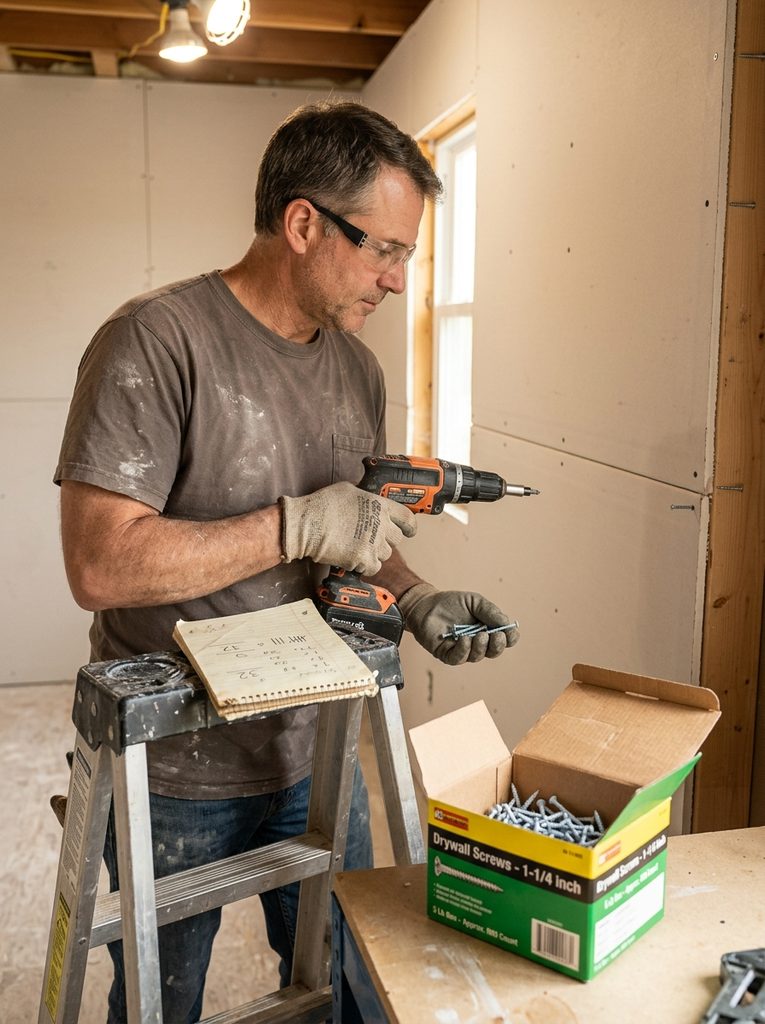
Screw count comes down to three things: sheet size, wall vs. ceiling placement, and stud spacing. For a standard 4×8 wall sheet, budget 28 to 32 screws; for ceilings and larger sheets, plan closer to 36 to 48. Use the formula above to estimate your whole room, and always round your box order up rather than down.

James Mitchell is the founder and sole creator behind Logic and Liquidity. With a deep passion for both finance and interior design, James manages every aspect of the website—from writing in-depth blog posts to handling strategy, operations, and content creation. His mission is to help homeowners see their spaces through a financial lens, proving that great design is a smart investment.