

Nobody wants to walk downstairs and step into a puddle. A flooded basement ruins belongings, breeds mold, and threatens your home’s structural integrity. The most effective defense against this is a proper basement floor drainage system.
A basement floor drainage system is an interior or exterior waterproofing setup—such as French drains, perimeter drain tiles, floor drains, and sump pump systems—designed to collect groundwater seepage and safely channel it away from the foundation.
Whether you are dealing with minor moisture or actively standing water, choosing the right system depends on your home’s age, foundation type, and budget. In this guide, we will break down the types of basement drainage, installation costs, and exactly how these systems keep your lower level dry year-round.
Types of Basement Floor Drainage Systems

When keeping water out of your basement, you have several primary options. Here is a scannable cheat sheet of the most common setups and what you can expect to pay.
Interior Perimeter Drain (French Drain)
This is the gold standard for basement waterproofing. Installed beneath the basement slab perimeter, it channels groundwater seepage directly to a sump pit.
- Best for: Homes with active hydrostatic pressure (water pushing up through the floor).
- Invasiveness: Requires jacking up the concrete floor along the edges.
- Average Cost: $4,000 – $15,000 average total installation.
Floor Drains & Sink Drains
These are direct, point-of-use drains set flush into the concrete slab. They are designed to handle sudden surface water from washing machine leaks, HVAC condensation, or utility sinks.
- Best for: Utility rooms and localized surface spills.
- Invasiveness: Minimal if installed during construction; requires spot-breaking concrete to retrofit.
- Average Cost: $300 – $800 per drain.
Sub-Floor Channel Systems (Baseboard/DryTrak)
These are non-invasive, surface-mounted channels adhered directly along the wall-floor joint. They capture water weeping from the walls before it reaches the floor.
- Best for: Low-budget retrofits, monolithic foundations, or relatively dry climates.
- Invasiveness: No jackhammering required; glued directly to the floor.
- Average Cost: $1,500 – $3,000.
Sump Pump & Basin Integration
A drainage system is useless without somewhere for the water to go. The sump pump basin collects incoming groundwater from the sub-floor drains.
Once the water hits a certain level, the pump activates and pushes it safely outside.
Anatomy of a Basement Floor Drain

Understanding how your system works makes troubleshooting much easier. A standard floor drain relies on a few key components to function safely.
- The P-Trap: Just like the sink in your bathroom, basement floor drains have a curved pipe called a P-trap. Water sits in this curve to block toxic sewer gases from rising into your home.
- Cleanout Plug: This is an access point located near the trap. It allows plumbers to run a snake through the line to clear severe blockages without tearing up the floor.
- Backflow Preventers: These one-way check valves (often utilizing a floating ball mechanism) ensure that if the municipal sewer overloads, sewage cannot back up into your basement.
Where the Drain Goes
Your drainage system must route collected water to an appropriate exit. Depending on local codes and your home’s design, your system will direct water to:
- Sump Pump Pits: Safely pushed out to the yard, a storm drain, or a dry well.
- Municipal Sewer Lines: Allowed in some older cities, but increasingly banned for groundwater routing.
- Septic Systems: Extremely rare for groundwater, as constant drainage can easily flood the drain field.
Interior vs. Exterior Drainage: Which is Better?
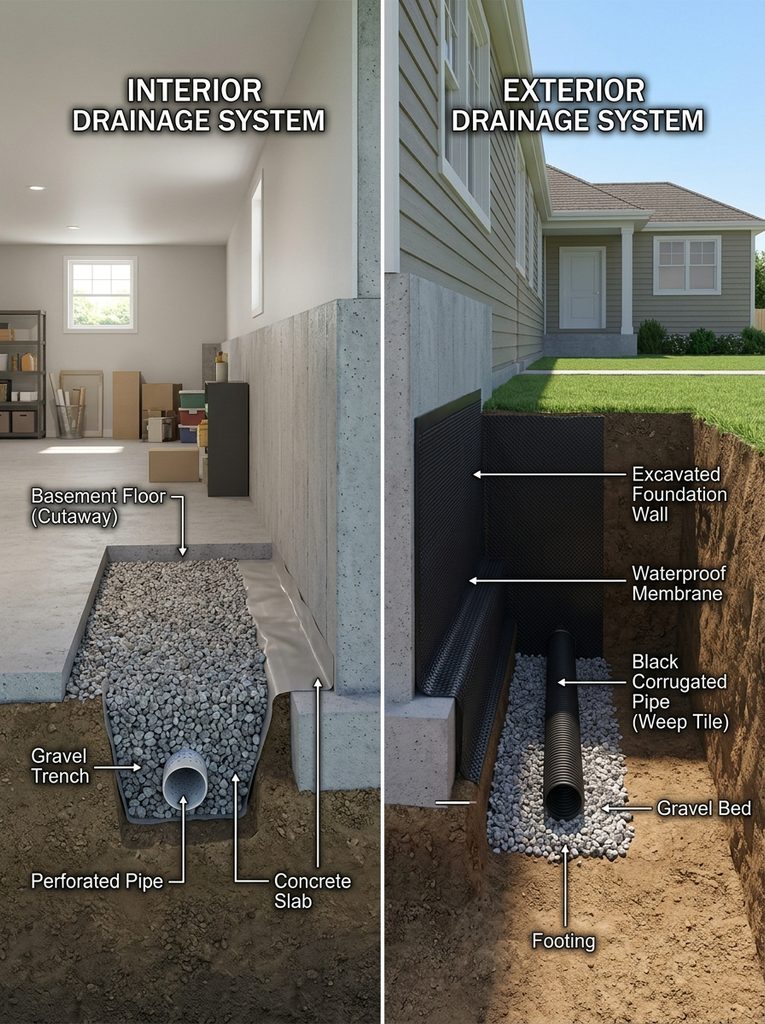
Choosing between an interior perimeter drain and an exterior French drain comes down to invasiveness, budget, and the source of your water problem.
An interior system is generally a cost-effective retrofit because it is installed from inside the basement, safe from the weather.
An exterior system stops water before it touches the foundation, but requires full foundation excavation. This means destroying landscaping, moving porches, and bringing heavy machinery into your yard.
Cost and complexity are heavily influenced by pipe depth, concrete jackhammering, local labor rates, and the required basin capacity (e.g., 18-inch vs. 24-inch sump pits).
Basement Floor Drainage System Installation

While adhering a baseboard channel can be a DIY project, installing a true interior perimeter drain requires heavy labor and specialized tools. Here is the standard installation sequence used by professionals:
- Jackhammering the Perimeter: A trench (usually 12 to 18 inches wide) is broken out along the interior foundation walls.
- Trench Digging: The dirt beneath the slab is excavated to create a downward slope toward the sump pit.
- Laying Pipe and Gravel: A bed of washed gravel is laid down, followed by perforated PVC or corrugated pipe, and then covered in more gravel to filter out mud.
- Setting the Sump Pit: A basin is installed at the lowest point of the trench to house the pump.
- Repouring Concrete: New concrete is poured over the trench, leaving a small gap at the wall edge to catch wall seepage.
Troubleshooting: Basement Floor Drain Backing Up

A floor drain backing up is a stressful emergency. Rising water levels usually point to a few common culprits.
- Clogged Pipe: Dirt, lint, and debris can easily clog the drain line over time. Use a plunger or a drain snake through the cleanout to clear the blockage.
- Dry P-Trap: If your basement smells like sewage but isn’t flooded, the water in the P-trap likely evaporated. Pour a bucket of water down the drain to re-seal the trap.
- Sewer Line Overload: During heavy rain, municipal sewer lines can become overwhelmed, pushing water back into your home. Installing a backwater valve physically blocks reverse water flow.
- Failed Sump Pump: If the power goes out or the float switch jams, the pit will overflow. Check the GFCI outlet, test the float switch, and ensure the discharge pipe isn’t frozen.
Maintenance Protocol
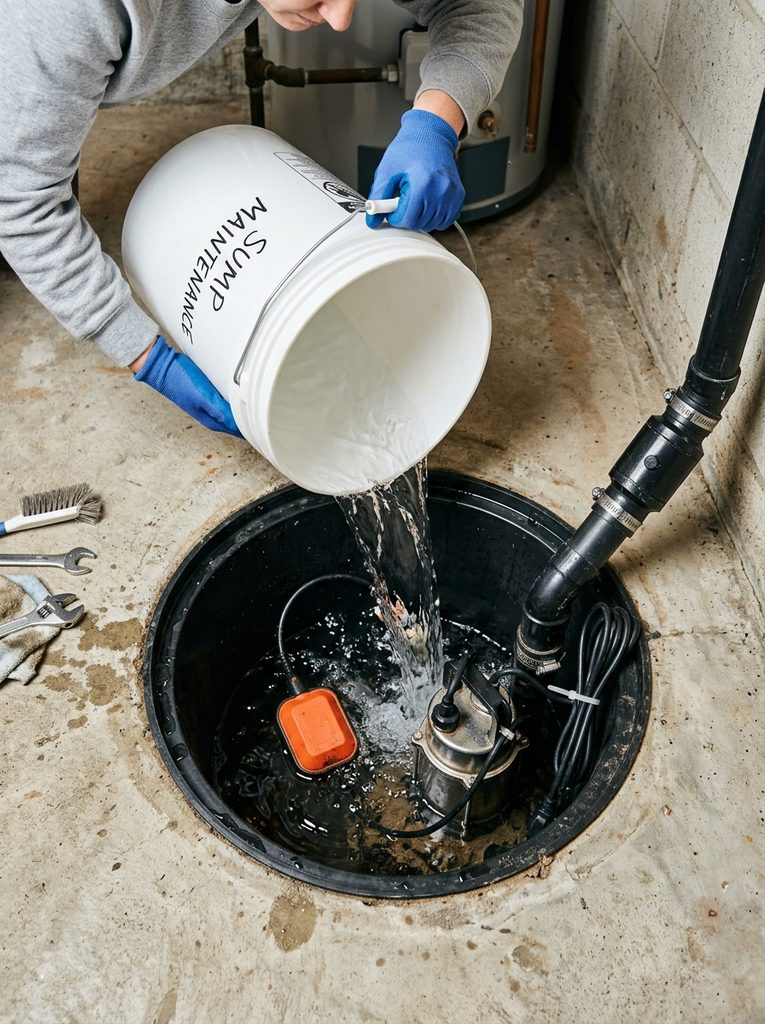
To ensure your system actually works during the next massive rainstorm, you need a proactive maintenance routine.
- Annual Sump Pump Testing: Pour a five-gallon bucket of water into the pit to ensure the float switch activates and the pump clears the basin quickly.
- Clearing Sediment from Traps: Regularly clear out any hair, lint, or debris from surface floor drains to prevent slow draining.
- Install a Battery Backup: Storms often knock out the power exactly when you need your pump the most. A battery backup system provides crucial power outage protection.
Frequently Asked Questions (FAQs)

How to drain water from a basement floor?
If you have standing water, first turn off the electricity to the area for safety. Use a wet/dry shop vacuum, a submersible utility pump, or a mop and bucket for small puddles. Once dry, run a dehumidifier to prevent mold growth.
What is the floor drain in a basement called?
It is generally just called a floor drain, but depending on where the water goes, it may be referred to as a sanitary sewer drain or a French drain inlet.
Can I install a basement drainage system myself?
You can easily install above-floor baseboard channels yourself. However, installing an interior perimeter French drain requires jacking up concrete and hauling gravel, which is best left to professional waterproofing contractors.
How much does a basement floor drainage system cost?
Costs vary widely based on the system. A simple surface floor drain replacement costs $300 to $800. A full perimeter French drain with a new sump pump typically ranges from $4,000 to $15,000.
Why does my basement drain smell bad?
A foul, rotten egg smell usually means the water in the drain’s P-trap has evaporated, allowing sewer gases to enter the home. Pour a gallon of water down the drain to restore the seal. Adding a tablespoon of mineral oil can slow future evaporation.
Does homeowners insurance cover a basement drain backing up?
Standard homeowners insurance usually does not cover water backup from an outside sewer or drain. You typically need to purchase a specific “water backup and sump overflow” endorsement for your policy to be covered.
Conclusion
A reliable basement floor drainage system is the ultimate peace of mind for any homeowner. Whether you opt for an affordable baseboard channel or a comprehensive interior perimeter drain, directing water safely away from your foundation is non-negotiable. Don’t wait for a flooded lower level to take action—assess your current drainage and keep those sump pumps maintained.

James Mitchell is the founder and sole creator behind Logic and Liquidity. With a deep passion for both finance and interior design, James manages every aspect of the website—from writing in-depth blog posts to handling strategy, operations, and content creation. His mission is to help homeowners see their spaces through a financial lens, proving that great design is a smart investment.


