

Last night I sat at my kitchen table with three different banking apps open. I felt a familiar pit in my stomach. Even though I earn more now than I did two years ago, the money seems to vanish. Rent in this city went up again last month. My grocery bill for just one person is higher than my family spent when I was a kid. You probably feel this too. The 2026 economy is a strange beast. We have AI tools that can track every penny, yet inflation eats our gains before we can even see them. I realized that the old way of budgeting is dead. You cannot just write down your expenses on a napkin and hope for the best. You need a system that handles the speed of the modern world. I spent the last three months testing every tool and method out there. I made mistakes. I missed a credit card payment because I forgot to sync an account. I overspent on a vacation because I did not account for the new travel taxes. But through those failures, I built a framework that works. This guide is the result of that trial and error. It is for anyone who is tired of feeling clueless when they look at their bank balance.
1. Face the Cold Hard Numbers Today
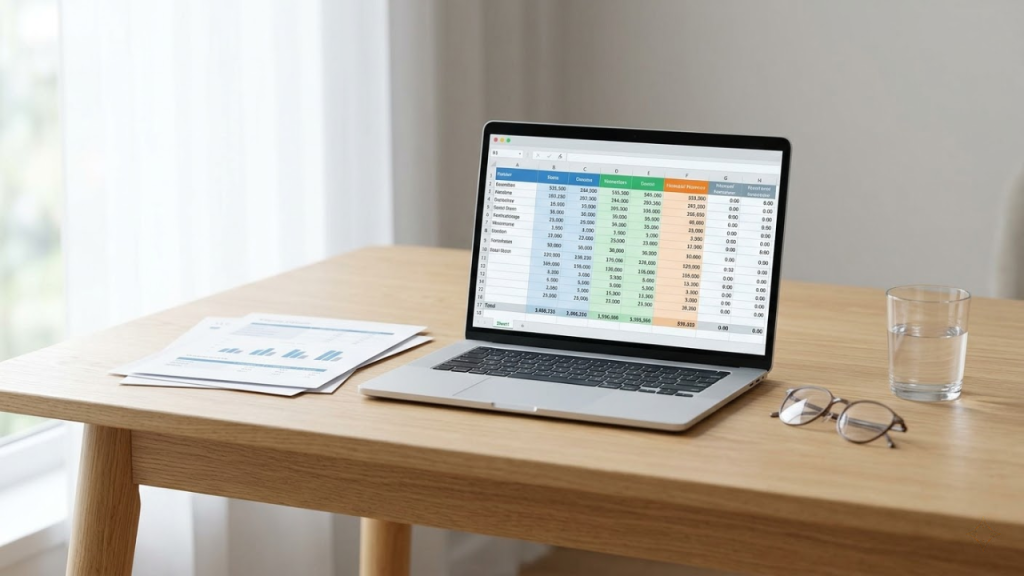
You cannot fix what you do not see. Most people avoid their bank statements because the truth hurts. I did this for six months in 2024. I ignored my credit card portal and just paid the minimums. By the time I looked, I owed twelve thousand dollars. It was a wake up call. To build a budget in 2026, you must start with a total audit. Open every app. Check your Venmo, your PayPal, and your hidden Apple Pay subscriptions.
Write down your total take home pay. This is the amount that actually hits your account after taxes and health insurance. Next, list your fixed costs. These are the things that stay the same every month. Think about rent, car insurance, and that high speed internet bill. In 2026, these costs are likely 15 percent higher than they were a year ago. Do not guess these numbers. Look at the actual transactions from the last ninety days.
I use a simple spreadsheet for this part. You can use a tool like Tiller if you want it to sync automatically. Tiller turns your bank data into a clean Google Sheet. It is honest. It does not let you hide your late night food delivery habits. When I first did this, I found out I was spending seven hundred dollars a month on takeout. I thought it was three hundred. That four hundred dollar gap is why I felt broke. Face the numbers now so you can control them later.
2. Track Every Single Transaction for Thirty Days

Tracking is different from budgeting. Budgeting is a plan. Tracking is the reality of your behavior. For the next month, I want you to record every cent that leaves your hand or your digital wallet. In 2026, we have too many ways to spend money. You tap your watch at the coffee shop. You click a button on Instagram to buy a shirt. It feels like play money because you never touch physical cash.
Use an app like Monarch Money or Copilot for this. These apps are great because they categorize things using AI. If they see a charge from a gas station, they know it is travel or fuel. However, do not trust the AI completely. You need to look at it every night. Spend five minutes before bed reviewing what you spent.
I call this the “daily download.” It keeps the pain of spending fresh in your mind. When you see that a simple lunch cost twenty eight dollars, you think twice the next day. A friend of mine, Sarah, started doing this in January. She realized she spent two hundred dollars a month on digital “skins” for a video game. She had no idea because the charges were only five dollars each. Those small hits add up to a massive hole in your wealth.
3. Define Your Why Beyond Just Saving Money

A budget with no goal is just a math problem. Math problems are boring. You will quit after two weeks if you do not have a reason to stay disciplined. Why do you want to manage your money? Is it to quit a job you hate? Is it to buy a house by 2028? Maybe you want to travel to Japan without putting it on a credit card.
I found that my “why” changed over time. Early on, I just wanted to stop the calls from debt collectors. That was a “pain” goal. Now, I have a “pleasure” goal. I want to have a hundred thousand dollars in a liquid account so I can say no to projects that do not excite me. That feeling of freedom is better than any new gadget.
Write your goal at the top of your budget. If you use a physical planner, put a picture of your dream home there. In 2026, the psychological side of money is more important than ever. We are bombarded with ads that tell us we are not enough. Your budget is your shield against that pressure. It reminds you that your future is more important than a temporary trend.
4. Choose a Budgeting System That Fits Your Brain

Not everyone likes the same system. Some people love the Zero Based Budgeting method. This is where every dollar has a job. If you earn five thousand dollars, you assign all five thousand to categories until there is zero left. This is what YNAB (You Need A Budget) teaches. It is very strict but very effective for people who are in debt.
Other people prefer the 50/30/20 Rule. You put 50 percent of your income toward needs, 30 percent toward wants, and 20 percent toward savings or debt. This is easier to manage if you have a stable income and low debt. However, in 2026, many people find that “needs” like rent now take up 60 percent of their income. You have to be flexible.
I personally use a hybrid method. I use the Pay Yourself First model. As soon as my check hits, my savings and investments are moved out automatically. I live on whatever is left. This takes the decision out of my hands. If I only have fifty dollars left for the week, I eat pasta. It forces me to stay within my limits without tracking every head of lettuce. Choose the one that you can actually stick to for more than a month.
5. Purge Your Subscriptions With Extreme Prejudice
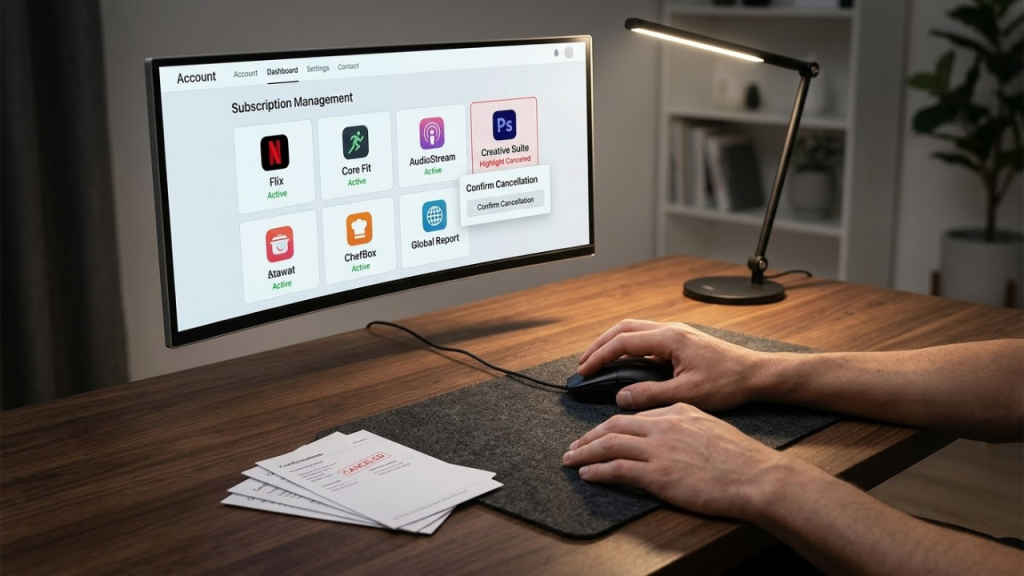
Subscription fatigue is real in 2026. Everything is a monthly fee now. Your car has a subscription for heated seats. Your software has a fee. Your favorite news site has a paywall. I did a “Subscription Sunday” last month. I sat down and looked at every recurring charge. I found two streaming services I had not watched in six months.
Use a tool like Rocket Money to find these hidden leeches. They can even negotiate some bills for you. I found a gym membership from my old city that was still charging me thirty dollars a month. I had moved a year ago. That is three hundred and sixty dollars wasted.
Be ruthless here. You can always sign up again later if you really miss it. Most of the time, you will not even notice it is gone. Sarah, the friend I mentioned earlier, cut her monthly subscriptions from fifteen down to four. She saved four hundred dollars a month. That is nearly five thousand dollars a year just by clicking “unsubscribe.” It is the easiest raise you will ever give yourself.
6. Build a Basic Safety Net Immediately
The world is volatile. Companies lay off workers with no warning. Car transmissions fail. Medical emergencies happen. In 2026, you need an emergency fund more than ever. The old advice was to save one thousand dollars. In today’s economy, one thousand dollars barely covers a set of tires.
Aim for one month of basic expenses first. If you need four thousand dollars to survive, make that your goal. Put this money in a High Yield Savings Account (HYSA). Look at banks like Ally or Marcus by Goldman Sachs. In early 2026, these accounts are still offering decent interest rates. Your money should work for you while it sits there.
I remember when my water heater burst in 2025. It cost two thousand dollars to fix. Because I had my safety net, it was just an annoyance. If I did not have the cash, it would have gone on a credit card at 24 percent interest. That would have cost me hundreds more in the long run. An emergency fund is not just for bills. It is for your mental health. It lets you sleep at night.
7. Attack High Interest Debt Using the Velocity Method
Credit card debt is a cage. If you are paying 20 percent interest or more, you are losing the game. You cannot invest your way out of that kind of interest rate. You need a plan to kill it fast. I prefer the Debt Snowball for the psychological win. You pay off the smallest balance first to get a quick victory.
However, the Debt Avalanche makes more sense mathematically. You pay the highest interest rate first. This saves you the most money over time. In 2026, we are seeing people use “Velocity Banking” where they use a Home Equity Line of Credit (HELOC) or a personal loan to consolidate debt. Be careful with this. If you do not fix your spending habits, you will just end up with a loan and more credit card debt.
I worked with a client who had thirty thousand dollars in debt across five cards. We moved the highest interest balances to a 0 percent intro APR card. This gave him eighteen months to pay it off without interest. He stayed focused and paid it off in fourteen months. He avoided thousands in interest charges. If you have debt, this must be your priority after your basic emergency fund is set.
8. Automate Your Financial Life to Save Your Willpower

Willpower is a limited resource. If you have to decide to save money every week, you will eventually fail. You will have a bad day at work and decide you “deserve” an expensive dinner instead. Automation removes the choice. It makes good habits the default.
Set up an automatic transfer from your checking account to your savings account. Do this on the day you get paid. If you never see the money in your spending account, you will not miss it. I also automate my retirement contributions. My 401k and IRA deposits happen without me touching a button.
Tools like Betterment or Wealthfront are great for this. They take your money and invest it based on your risk level. In 2026, these “robo advisors” have become very smart. They handle tax loss harvesting and rebalancing for you. I spent years trying to pick stocks and I usually lost. Now, I let the machines do the work. I have seen a 12 percent return over the last year just by staying out of the way.
9. Create Sinking Funds for Known Future Costs

One of the biggest budget killers is the “surprise” expense that is not actually a surprise. Your car needs registration every year. Christmas happens every December. You will eventually need new shoes. These are not emergencies. They are predictable costs.
Sinking funds are small savings buckets for these specific items. I have five sinking funds. One is for car repairs. One is for travel. One is for my annual Amazon Prime fee. Every month, I put twenty dollars into the Amazon bucket. When the bill comes in the fall, the money is already there.
I use Ally Bank because they have a “buckets” feature in their savings accounts. You can see exactly how much you have for each goal within one account. It keeps your money organized. When I wanted to buy a new laptop last year, I did not have to touch my emergency fund. I used my “Tech Sinking Fund” which I had been funding for eighteen months. It felt like getting the laptop for free because the money was already gone from my mind.
10. Master the Art of Grocery Inflation in 2026

Food is the most volatile part of a 2026 budget. Prices change weekly based on supply chains and weather. If you walk into a grocery store without a plan, you will overspend. I used to go to the store when I was hungry. I would leave with eighty dollars worth of snacks and nothing for actual meals.
Meal planning is the only way to win. I use an app called AnyList to keep my grocery list synced with my recipes. I check what is on sale first. If chicken is cheap, we eat chicken that week. I also buy generic brands for basics like beans, rice, and frozen vegetables. The quality is the same, but the price is 30 percent lower.
Consider a warehouse club membership like Costco or Sam’s Club if you have a family. Buying in bulk for non perishables saves a lot over a year. I buy my coffee, toilet paper, and laundry detergent in bulk. It sounds like a small thing, but it adds up to over a thousand dollars in annual savings. Also, stop buying pre cut fruit. You are paying a 200 percent markup for five minutes of labor. Cut it yourself.
11. Manage Your Side Hustle Income for Taxes

In 2026, almost everyone has a side hustle. Maybe you drive for a delivery app or sell crafts on Etsy. This extra income is great, but it is a trap if you do not budget for taxes. I learned this the hard way in 2023. I made ten thousand dollars from freelance writing and spent it all. When tax season came, I owed three thousand dollars that I did not have.
Open a separate bank account for your business income. As soon as you get paid, move 30 percent of it into a “Tax” bucket. Do not touch it. It is not your money. It belongs to the government. Use a tool like Found or Lance. These are banks built for freelancers. They calculate your estimated taxes in real time and can even pay them for you.
Treat your side hustle like a business, not a hobby. Track your expenses too. Your home office, your internet, and even part of your phone bill might be tax deductible. I use QuickBooks Solopreneur to keep everything clean. It makes tax time a breeze instead of a nightmare. If you manage this correctly, your side hustle can be the fuel that speeds up your debt payoff or your home purchase.
12. Review Your Progress and Pivot Monthly

A budget is a living document. It is not something you set once and forget. Your life changes. Your priorities shift. Maybe you decide you want to get married or move to a new city. Your budget needs to reflect that. I hold a “Money Minute” every month on the first Sunday.
I look at three things. First, did I spend more than I earned? Second, did I hit my savings goals? Third, what is one thing I can do better next month? I do not beat myself up if I missed a target. I just look for the reason. If I spent too much on utilities, I check if there is a draft in my windows or if I should adjust the thermostat.
This monthly check in keeps you engaged. It prevents the “drift” that happens when you stop paying attention. I have a friend who thought he was doing great until he checked his net worth. He realized his car was depreciating faster than he was saving. That insight allowed him to sell the car and get something more sensible. Constant adjustment is the secret to long term wealth.
Frequently Asked Questions
What is the best budgeting app for 2026? The “best” app depends on your style. If you want total control and follow the zero based method, YNAB is king. If you want something that is easy to look at and uses AI to categorize spending, Monarch Money or Copilot are the top choices this year. For those who want something free and simple, Empower (formerly Personal Capital) is great for tracking your net worth and investments in one place.
How much should I save for an emergency fund in 2026? While the old rule was three to six months of expenses, the current economy suggests aiming for six months if possible. With high rent and volatile job markets, having a larger cushion provides essential security. Start with one month of “survival” expenses and build from there. If your monthly needs are $4,000, aim for a $24,000 total goal over time.
How do I budget with an irregular income? If you are a freelancer or commission based worker, use a “hill and valley” fund. Budget based on your lowest earning month. When you have a high earning month, put the extra into a separate savings account. Use that extra to supplement your income during the months when work is slow. This creates a steady “salary” for yourself regardless of when clients pay.
Is the 50/30/20 rule still realistic with high inflation? It is becoming harder for many people. If your rent takes up 40 percent of your income, the 50 percent “needs” bucket is almost impossible once you add food and transport. In 2026, many people are moving to a 60/20/20 or even a 70/15/15 split. The key is to keep some amount going toward savings, even if it is only 5 percent. The habit is more important than the percentage.
Should I pay off debt or invest first? Always look at the interest rate. If your debt is above 7 or 8 percent (like credit cards or some personal loans), pay it off first. That is a guaranteed “return” on your money. If your debt is low interest, like a mortgage from a few years ago at 3 percent, you are usually better off investing in the market where you can earn 7 to 10 percent over the long term.
How can I save money on groceries without starving? Focus on “bulk and base” shopping. Buy large bags of rice, beans, and grains as your base. Add seasonal produce and proteins that are on sale. Avoid the middle aisles of the store where the expensive, processed foods live. Using a slow cooker or pressure cooker can also make cheaper cuts of meat taste great. Meal prepping on Sundays prevents expensive mid week takeout orders.
Is it worth using AI financial advisors? AI tools are great for data analysis and finding patterns in your spending. They can suggest where to cut costs or alert you to unusual activity. However, they lack the “human” touch for big life decisions. Use AI for the grunt work of tracking and organizing, but make the final strategic decisions yourself based on your personal values and goals.
I hope this guide helps you feel more in control. Money does not have to be a source of constant dread. When you have a plan, you move from a place of fear to a place of power. You stop wondering where your money went and start telling it where to go. It takes time to get it right. You will have months where you fail. That is okay. Just get back on track the next day. Your future self is counting on you to make these changes now.