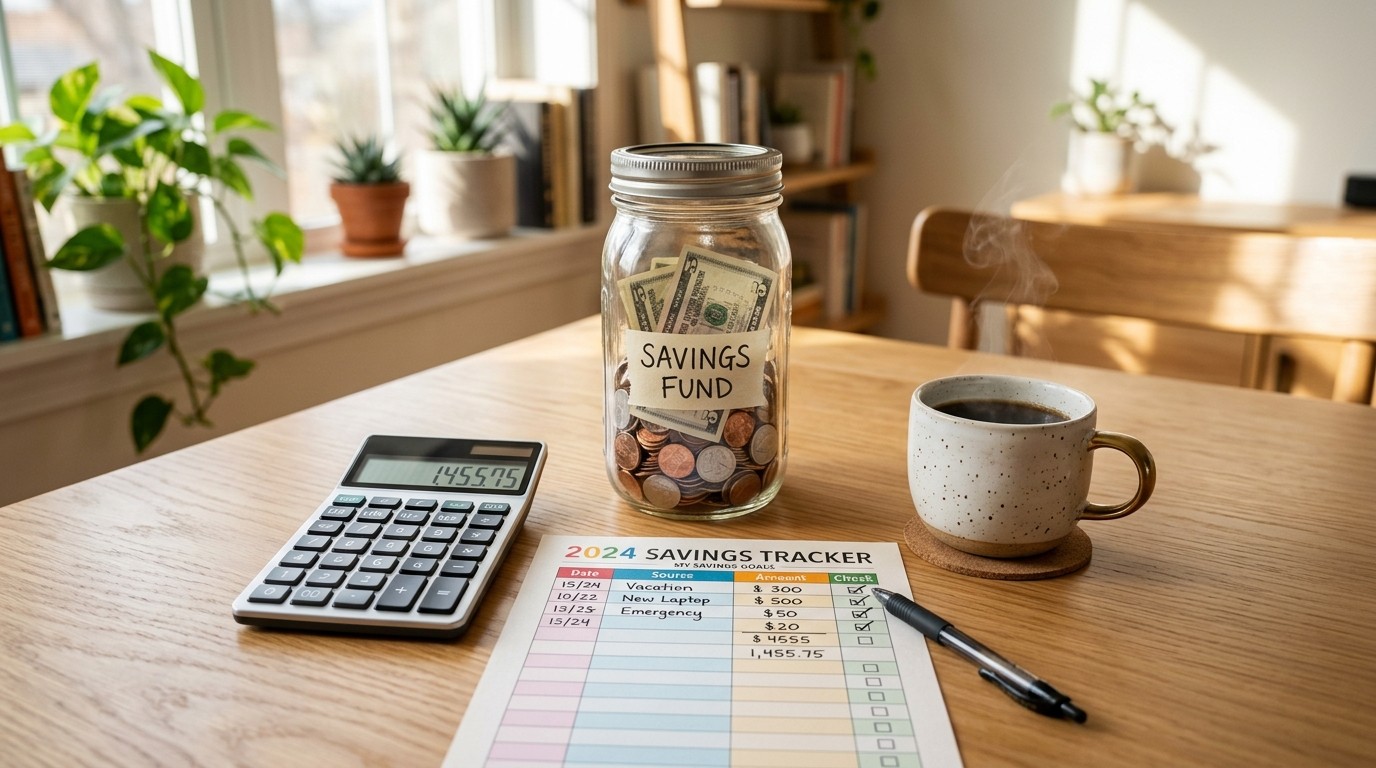
Small wins lead to massive bank accounts. Most people fail at budgeting because they try to save $500 at once. That hurts. It feels like a sacrifice. Mini savings challenges change the psychology of money. They turn a chore into a game. If you can save $5, you can save $5,000. It just takes a different approach to the math.
I remember staring at a $427 car repair bill three years ago. I did not have the money. I felt like a failure. That night, I started my first 20 week savings challenge. I did not aim for thousands. I aimed for $10 a week. That small habit broke the cycle of living paycheck to paycheck. These mini savings challenges are the exact tools I used to build my first $2,000 emergency fund.
What are Mini Savings Challenges?
A mini savings challenge is a short-term financial goal designed to build momentum. Unlike a year-long resolution, these last a week, a month, or 20 weeks. They focus on small, manageable amounts. You might save $1 today and $2 tomorrow.
These savings challenges for beginners work because they provide an immediate hit of dopamine. When you color in a circle on a printable savings challenge PDF, your brain views it as a win. This guide covers twenty specific methods to grow your balance. We will look at everything from the monthly mini savings tracker to the 20 week savings challenge structure.
1. The $5 Bill Collection Challenge
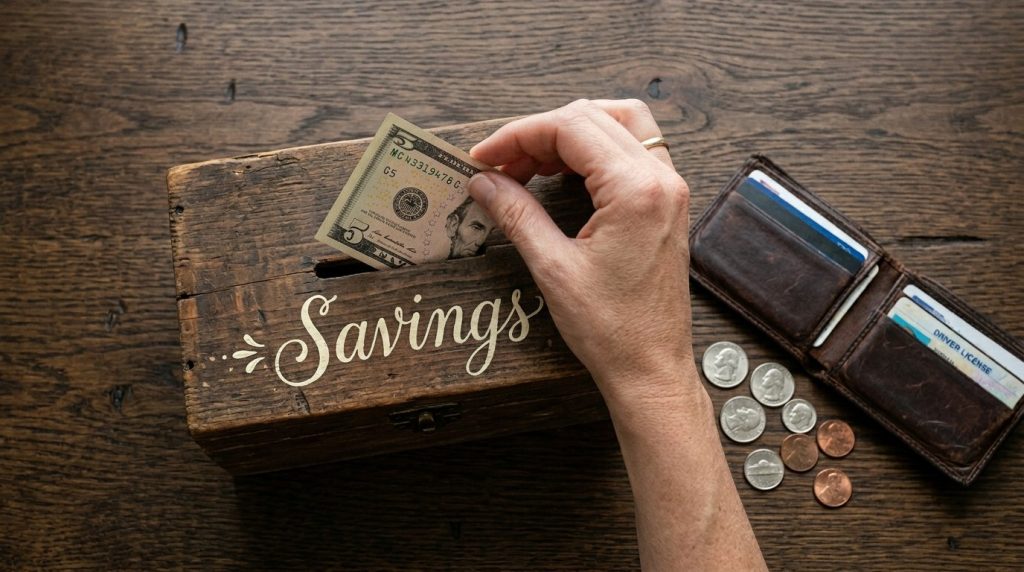
Every time a $5 bill enters your wallet, it is officially dead to you. You cannot spend it. You must put it in a jar or a dedicated envelope. This is one of the most easy money saving challenges because it relies on physical triggers.
I tried this for three months in 2024. I was surprised to find I had $315 tucked away. I didn’t miss the money because I never “planned” to have it. If you primarily use digital currency, move $5 to savings every time you see a transaction ending in a 5.
2. The Round Up Digital Challenge

Modern banking makes beginner budget challenges effortless. Check if your bank has a round-up feature. If you spend $4.32 on coffee, the bank rounds it to $5.00. The $0.68 goes into a separate account.
In my experience, this generates about $30 to $50 a month without any conscious effort. It is the ultimate “set it and forget it” strategy. For those using a monthly mini savings tracker, you can log these daily totals to see how fast pennies turn into dollars.
3. The No Spend Weekend

Pick two weekends a month where your spending is zero. You can pay for gas to get to work, but no takeout, no movies, and no online shopping. This forces you to get creative with what you already own.
During my first no-spend weekend, I found three boxes of pasta in the back of my pantry. I saved $80 that I usually would have spent at a local diner. This is a staple for savings challenges for beginners because it resets your relationship with “boredom spending.”
4. The 52 Week Mini Version
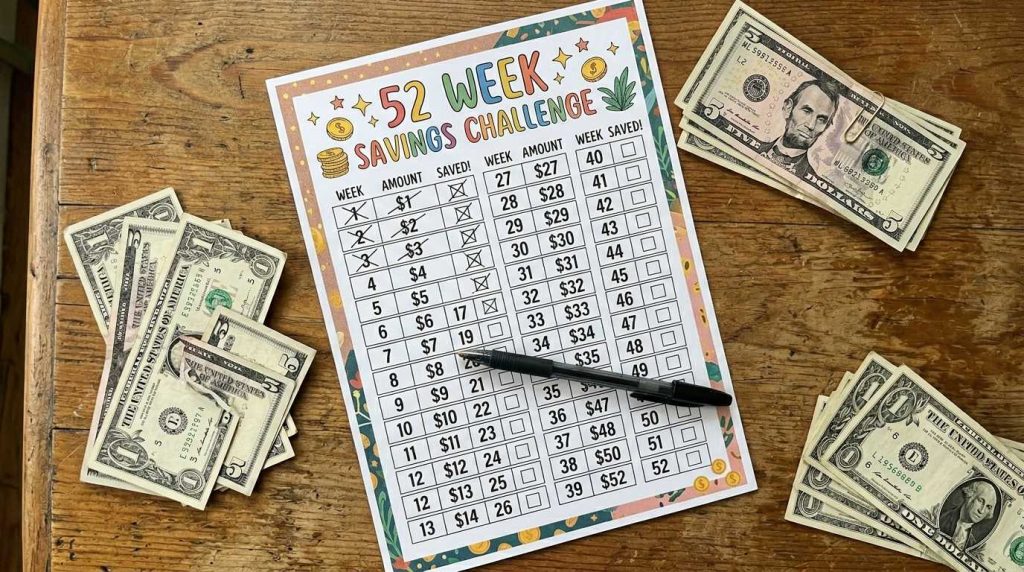
The traditional 52-week challenge asks for $1 in week one and $52 in the final week. For beginners, that $52 can feel heavy. Instead, try a version where you never go above $20.
You save $1, then $2, then $3, up to $20. Then you start back at $1. This creates a consistent flow. Use a free savings challenge printable to track these cycles. It removes the fear of the “big” weeks at the end of the year.
5. The Spare Change Jar

Old school works. Put a glass jar by your front door. Every evening, empty your pockets. Even if it is just two pennies and a nickel, drop them in.
I took my jar to a Coinstar last July. I had $84.12. That paid for a full tank of gas and a grocery trip. People overlook this because it seems too small. Do not make that mistake. Small numbers are the foundation of mini savings challenges.
6. The 20 Week Savings Challenge
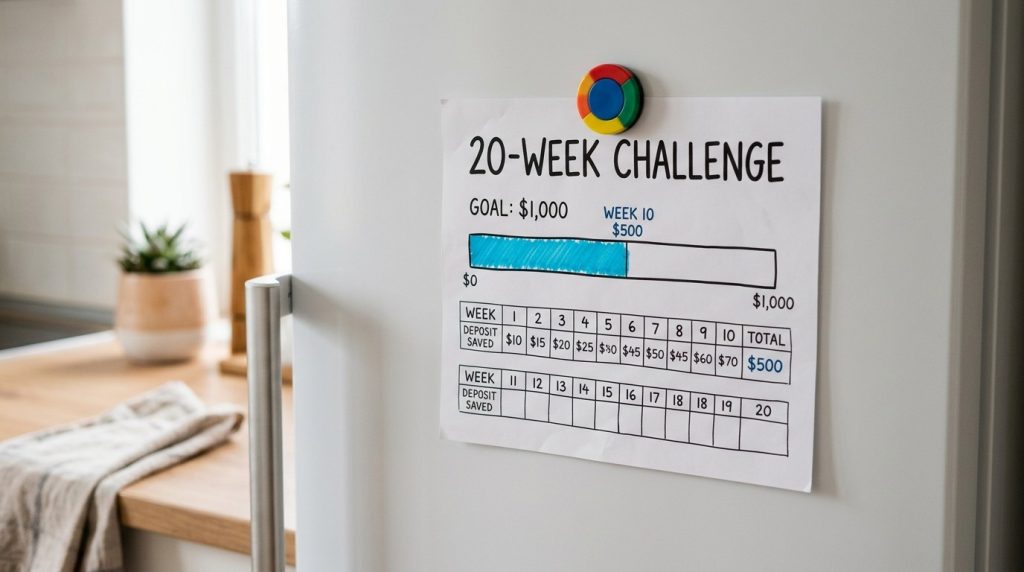
This timeframe is the “Goldilocks” zone of saving. It is long enough to see results but short enough to stay motivated. Aim to save a total of $500 or $1,000 over these twenty weeks.
A popular structure is saving $25 in week one, $50 in week two, and alternating. By the end, you have a significant cushion. If you need a visual, look for a 20 week savings challenge chart online to keep on your fridge.
7. The Coffee Swap Method

I love a good latte. But $6 a day is $180 a month. For this challenge, commit to making coffee at home for 30 days straight.
Take the $6 you would have spent and move it to your savings app immediately. Watching the balance grow in real-time is more satisfying than the caffeine hit. This is one of the most effective easy money saving challenges for urban professionals.
8. The Weather Savings Game
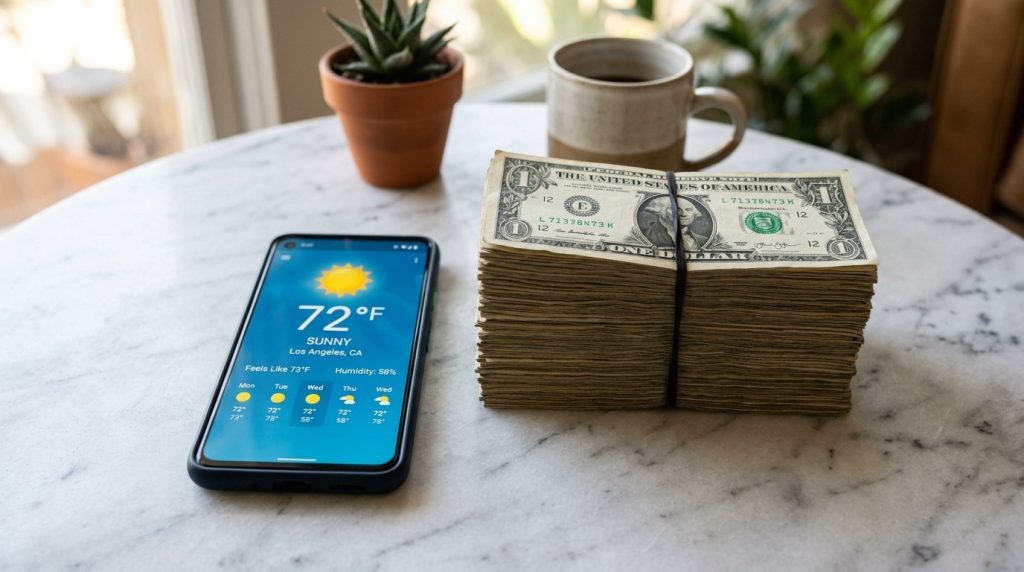
This is a fun way to use a monthly mini savings tracker. Every Wednesday, look at the high temperature for the day. Save that amount in dollars.
If it is 72 degrees, you save $72. If it is 30, you save $30. It adds an element of surprise to your budget. In the summer, your savings will skyrocket. In the winter, your budget gets a break.
9. The Cancel One Subscription Challenge
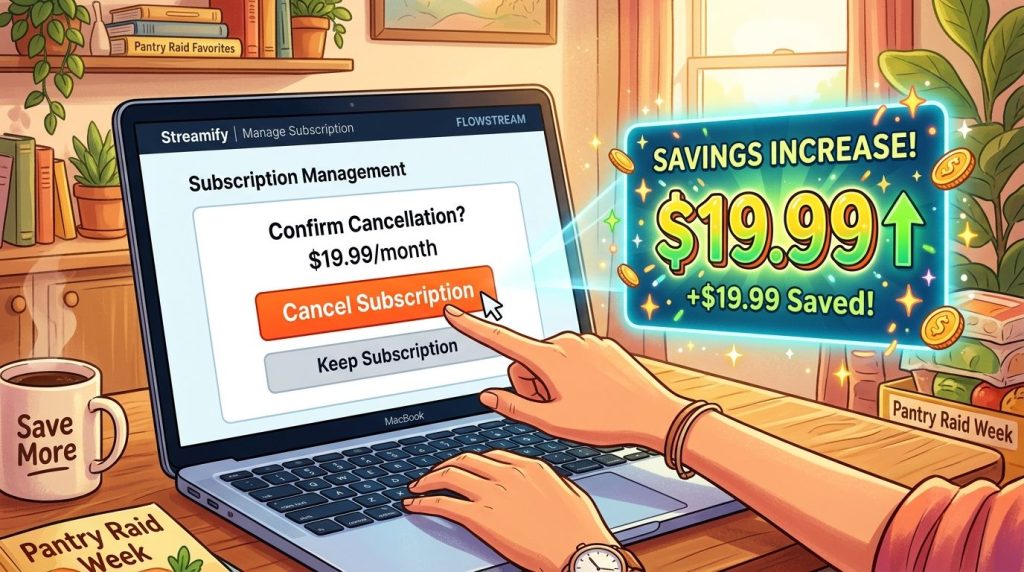
We all have them. The streaming service you don’t watch or the gym you don’t visit. Find one subscription and kill it today.
Take that monthly cost (usually $15 to $30) and set up an automatic transfer for that exact amount to your savings. You were already spending it, so you won’t feel the loss. This is a “one and done” win for beginner budget challenges.
10. The Pantry Raid Week
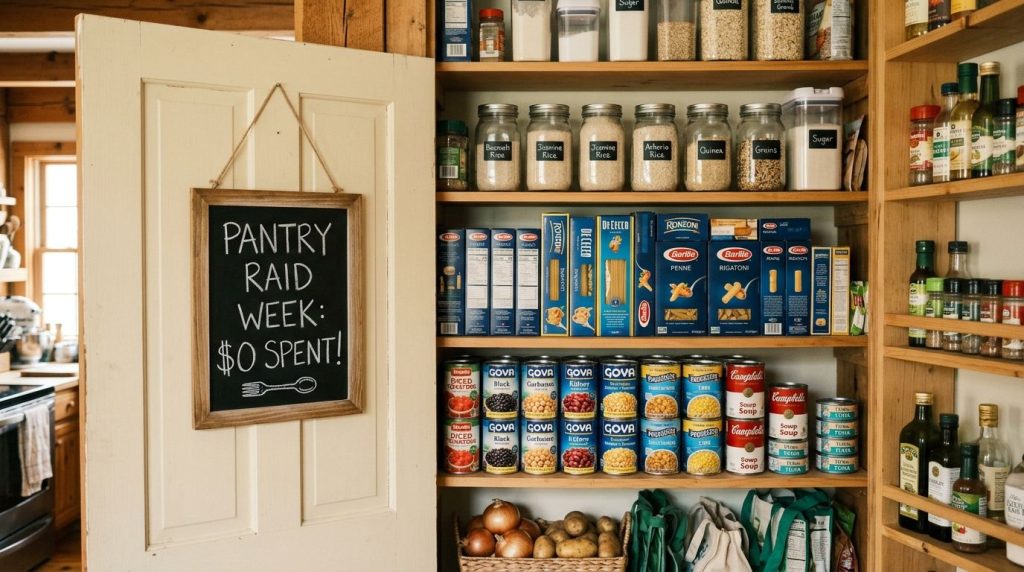
Instead of going to the grocery store this week, eat what you have. Use the frozen peas, the rice, and the canned tuna.
Most households have $50 to $100 worth of food sitting in cupboards. By skipping the store for seven days, you can dump your entire grocery budget into a printable savings challenge PDF goal. I do this every quarter to declutter my kitchen and pad my bank account.
11. The $1 Daily Increase
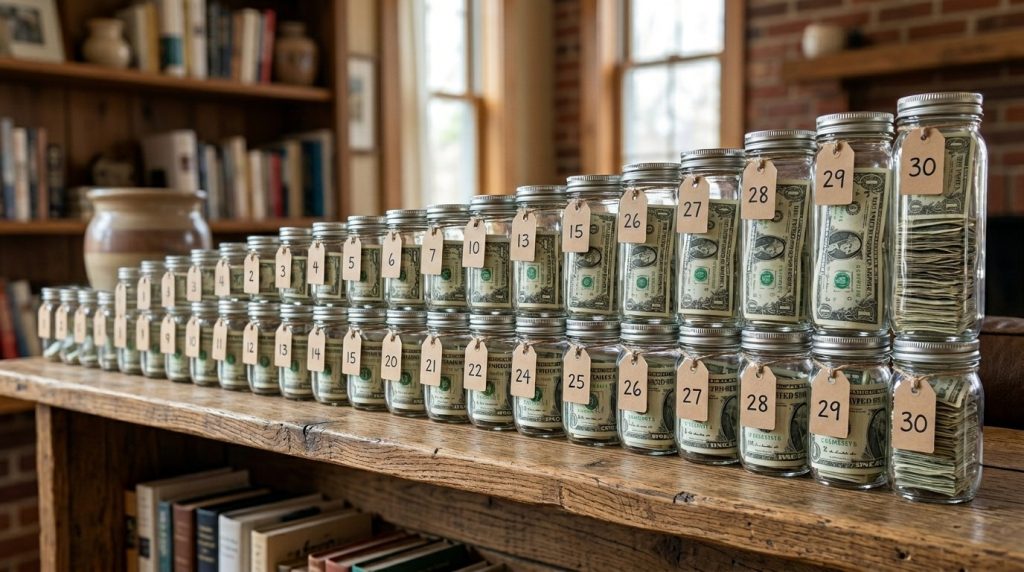
Start on the first of the month. Save $1. On the second, save $2. By the 30th, you are saving $30.
Total savings for a 30-day month? $465. This is intense toward the end, but the fast results are incredible. It is perfect for people who want to see a big jump in their monthly mini savings tracker quickly.
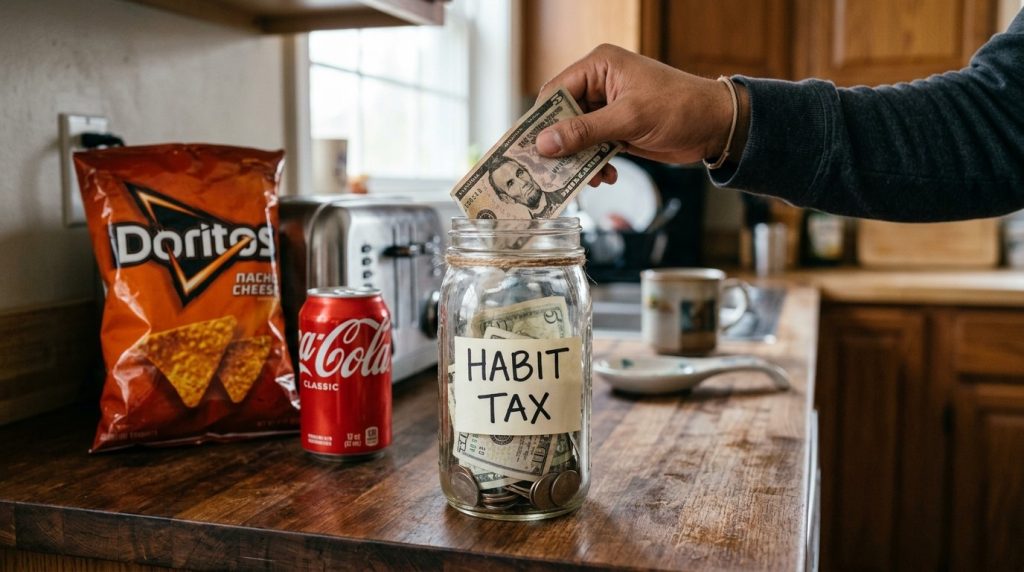
12. The Vice Tax Challenge
Do you have a habit you want to curb? Maybe it is soda, cigarettes, or mindless scrolling. Every time you “give in,” you have to pay a $5 tax to your savings account.
Alternatively, if you resist the habit, reward yourself by putting $2 into savings. It turns behavior modification into a financial win. This is how I finally stopped buying expensive energy drinks at the gas station.
13. The Generic Brand Swap
For one month, buy only the store-brand version of every grocery item. Most store brands are 30% cheaper than name brands.
Calculate the difference at the bottom of your receipt. Move that difference into your mini savings challenges fund. You will find that most generic items are identical in quality, making this a permanent way to save.
14. The Holiday Sinking Fund

Don’t let December ruin your finances. Start a mini challenge in July. Save $20 a week for 20 weeks.
By the time Black Friday arrives, you have $400 in cash. No credit cards. No debt. Use a free savings challenge printable specifically for holidays to keep your eyes on the prize.
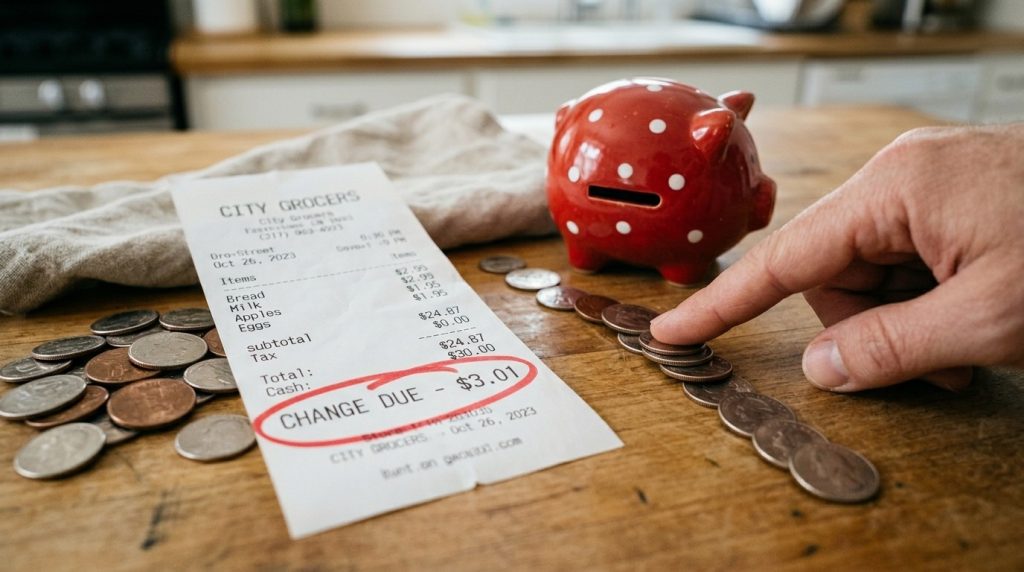
15. The Receipt Round Up

Every time you get a paper receipt, look at the change. If your total was $14.20, the “change” to the next dollar is $0.80.
At the end of the week, add up all those cents from your receipts and transfer the total. It is a manual version of the digital round-up, but it makes you more aware of every transaction you make.
16. The Declutter for Cash Challenge
Spend one weekend cleaning out your closet. Find five items to sell on Facebook Marketplace or Poshmark.
Whatever you earn goes directly into your savings challenges for beginners fund. I once sold an old blender and two pairs of jeans for $65. It felt like “free” money because those items were just gathering dust.
17. The 30 Day No-Treat Challenge

This targets the “extras.” No candy bars at the checkout, no extra side of fries, and no paid apps.
The goal isn’t to be miserable. The goal is to identify impulsive behavior. Track every “no” and assign a $2 value to it. You will be shocked at how many times a day you almost spend small amounts of money.
18. The Lunch Box Challenge

Packing a lunch costs about $2. Buying a lunch costs about $12. That is a $10 daily difference.
Do this for 20 workdays in a month. You just saved $200. This is the heavy hitter of easy money saving challenges. Use a monthly mini savings tracker to visualize the $200 mountain you just built.
19. The Birthday Week Challenge

During the week of your birthday (or a loved one’s), save the amount of the new age. If you are turning 30, save $30.
It is a small, symbolic way to celebrate a milestone while improving your financial health. If you are feeling ambitious, save that amount every month of your birth year.
20. The $100 Emergency Sprint

The goal is to save $100 as fast as humanly possible. No timeframe. Just a race.
Sell items, walk dogs, skip meals out, and scrounge for change. Once you hit $100, put it in a separate “do not touch” account. This builds the “muscle” required for more complex beginner budget challenges.
Tools for Success
You do not need expensive software. A simple printable savings challenge PDF is often more effective because it is physical. Here are some tools I recommend:
- Digit or Qapital: Great for automated round-ups.
- Canva: Excellent for finding a free savings challenge printable.
- High-Yield Savings Accounts: Keep your challenge money separate from your checking.
- YNAB (You Need A Budget): For those ready to move past mini challenges into full budgeting.
Why Most People Fail (And How You Won’t)
The biggest trap is “The All or Nothing” mindset. People think if they spend $5 on a bad day, the whole challenge is ruined. It is not.
If you miss a day on your 20 week savings challenge, just start again tomorrow. The goal is the habit, not perfection. I have failed at least a dozen no-spend weekends. I just keep trying until they become a regular part of my life.
Frequently Asked Questions
Which challenge is best for absolute beginners?
The Round Up challenge is best because it requires zero willpower. It happens in the background of your life. Once you see that working, move to a 20 week savings challenge.
How do I stay motivated when the amounts are small?
Use a visual tracker. Coloring in a printable savings challenge PDF provides a sense of accomplishment that a digital screen cannot match.
Can I do multiple challenges at once?
Yes, but be careful. Start with one. Once that feels easy, layer on another. Don’t overwhelm your budget or your brain.
Where should I keep the money I save?
Keep it in a separate savings account. If it stays in your checking account, you will spend it. Accessibility is the enemy of savings.
What if I have an emergency during the challenge?
That is what the money is for! If you have to use your challenge savings for a real emergency, the challenge was a success. You had the money when you needed it.
Are these challenges good for kids?
Absolutely. Using a free savings challenge printable is a fantastic way to teach children about the power of consistency and compound effort.
How much can I really save with mini challenges?
If you follow a few of these, saving $1,000 to $2,000 in a year is very realistic for most beginners.
Summary of Costs and Benefits
| Challenge | Estimated Monthly Savings | Difficulty Level |
| Round Ups | $30 – $50 | Very Easy |
| Lunch Packing | $200 | Moderate |
| No Spend Weekend | $160 (2 weekends) | Hard |
| $5 Bill Jar | $20 – $100 | Easy |
| Subscription Kill | $15 – $50 | Easy |
Final Thoughts on Mini Savings
Financial freedom is a series of small choices. It is not a lottery win. By using mini savings challenges, you are training your brain to see opportunity where you used to see “just a few dollars.”
Start today. Pick one challenge from this list. Download a printable savings challenge PDF. Save your first dollar. You will thank yourself in twenty weeks when you are looking at a bank balance that finally reflects your hard work.

James Mitchell is the founder and sole creator behind Logic and Liquidity. With a deep passion for both finance and interior design, James manages every aspect of the website—from writing in-depth blog posts to handling strategy, operations, and content creation. His mission is to help homeowners see their spaces through a financial lens, proving that great design is a smart investment.