Fresh eggs are becoming a luxury item these days, and if you have looked at the price of pre-built chicken coops lately, you might think you need a second mortgage just to house a few birds. But here is the truth: chickens don’t care about crown molding or designer paint. They need safety, ventilation, and a dry place to sleep. If you are willing to get a little sawdust on your jeans, you can build a five-star poultry palace for the price of a couple of pizzas.
Sustainable living shouldn’t be gated behind a high entry fee. By sourcing reclaimed materials and following some basic structural principles, you can turn a weekend project into a decade of food security. Whether you are working with a sprawling acre or a tiny urban lot, these low budget chicken coop ideas are designed to keep your wallet heavy and your hens happy.
Executive Summary
Building a functional coop on a budget requires a shift from buying to scavenging. This guide covers 18 distinct strategies to house your flock for under $50–$100. Key takeaways include the use of Chicken Coop Pallets for free lumber, converting existing structures like sheds into a Chicken Shed With Run, and utilizing Low Cost Diy Chicken Coop techniques such as the A-frame design. We emphasize security from predators using a Low Cost Chicken Run and offer specific advice for those looking to manage multi-species setups like a Chicken Coop And Goat Pen. By the end of this read, you will have a clear roadmap to constructing a Cost Effective Chicken Coop without sacrificing the health or safety of your birds.
1. The Magic of Chicken Coop Pallets and Free Lumber

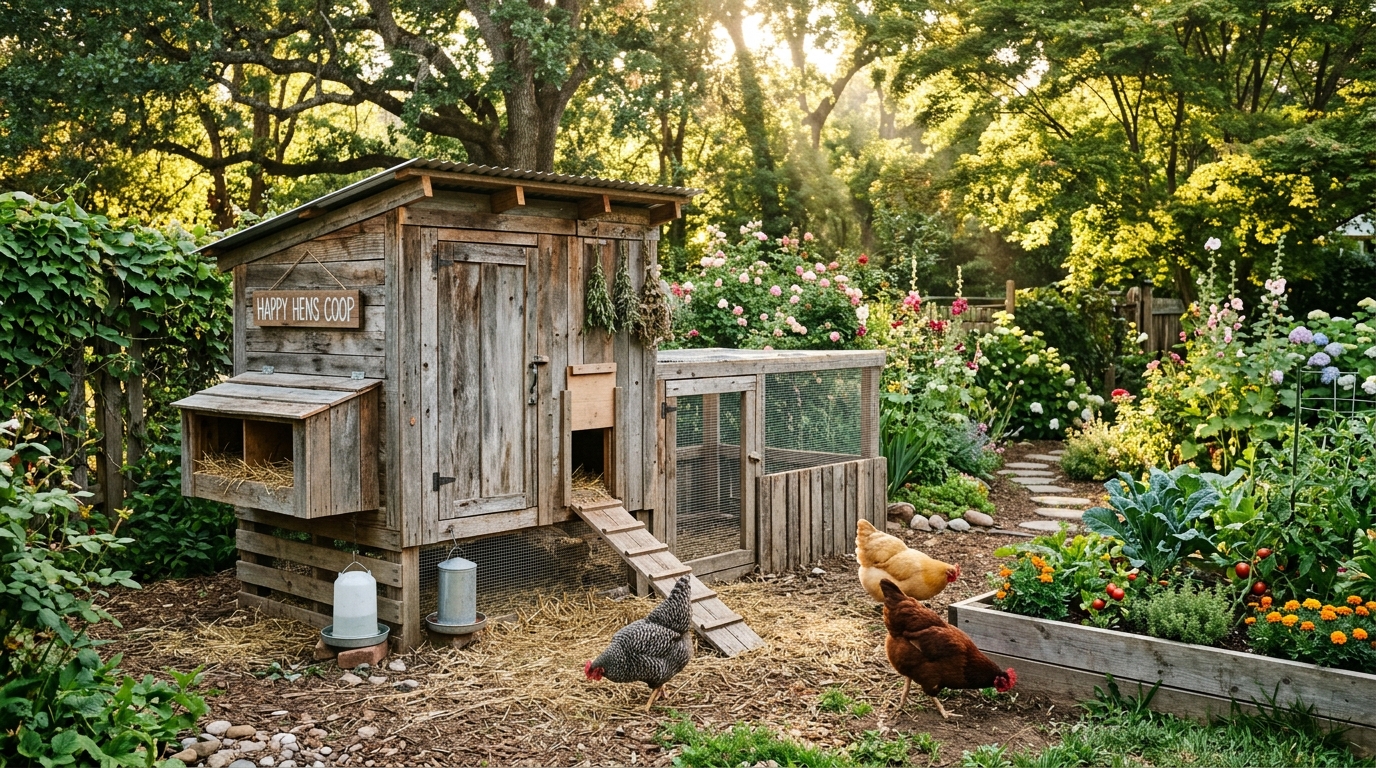
The single best way to keep your costs near zero is to find free wood. Shipping pallets are the backbone of the budget homestead. You can often find them behind local hardware stores or small businesses (just ask first!). When building with Chicken Coop Pallets, look for the “HT” stamp, which stands for Heat Treated. Avoid “MB” pallets, as they are treated with methyl bromide.
To turn pallets into a coop, you can either dismantle them for the individual slats or use them as whole “walls” by securing them to 4×4 corner posts. This method creates a sturdy, rustic look that costs exactly $0 in lumber. You can use the saved money for high-quality hardware cloth, which is non-negotiable for safety.
2. Scouting Free Diy Chicken Coop Plans Online

Before you swing a hammer, you need a blueprint. You don’t need to pay an architect for this. There are thousands of Diy Chicken Coop Plans available for free in the public domain or shared by generous bloggers. The key is to look for plans that prioritize “stick-frame” construction, which is the most forgiving for beginners.
A good plan will account for nesting boxes, roosting bars, and the “poop board” (a lifesaver for cleaning). When searching, focus on designs that use standard dimensions like 4×4 or 4×8, as this minimizes wood waste. [Internal Link: Our Guide to Seasonal Poultry Care]
3. Creating a Functional Chicken Coop Garden Hybrid

Why separate your chickens from your vegetables? A Chicken Coop Garden setup uses the “chicken tractor” philosophy or a stationary coop bordering your garden beds. The chickens provide high-quality nitrogen for your soil through their manure, and in return, they get to eat the pests and weeds that plague your kale.
To do this on a budget, use leftover garden fencing to create a “tunnel” from the coop into specific garden zones. This keeps the birds where you want them and away from your prized tomatoes. It is a closed-loop system that saves you money on both fertilizer and chicken feed.
4. Designing Your Backyard Chicken Coop Plans for Success
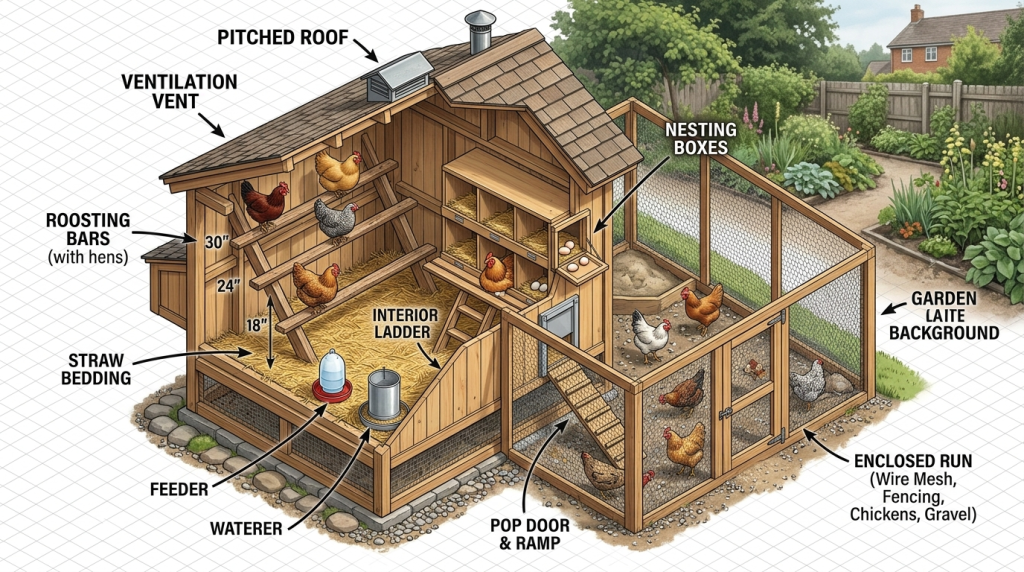
When sketching your Backyard Chicken Coop Plans, consider the “Rule of Four.” Each bird needs roughly 4 square feet of space inside the coop and 10 square feet in the run. If you are tight on space, think vertically. Building a “lofted” coop where the birds sleep above their run effectively doubles your footprint without taking up more yard space.
Your plan should also include a “human access door.” There is nothing more frustrating than trying to clean a coop through a tiny chicken-sized hole. A full-sized door might cost an extra $15 in hinges, but it will save you hours of back pain over the next year.
5. Why an Easy Chicken Coop Saves You Time and Money
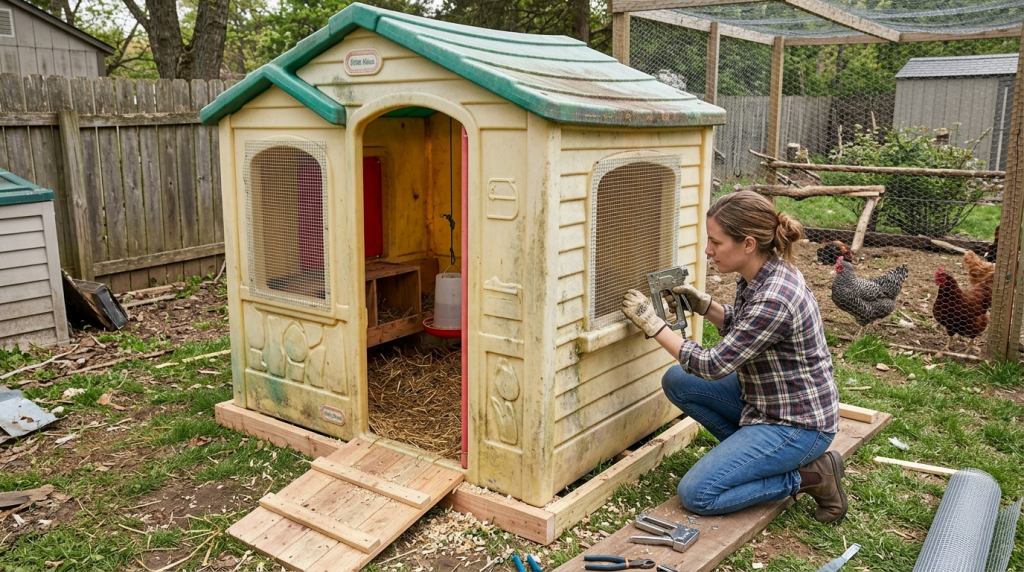
Sometimes, the best Easy Chicken Coop is the one you didn’t actually “build.” Can you repurpose an old plastic playhouse that the kids outgrew? Or perhaps a sturdy dog house? With a few modifications—adding ventilation holes (covered in wire) and a nesting box—these pre-existing shells become excellent Small Chicken Coops.
This “conversion” method is often the Cheapest Diy Chicken Coop route because the structural integrity is already there. You are simply adding the specialized poultry features. It’s fast, effective, and keeps plastic out of landfills.
6. How to Construct a Small Chicken Coops Oasis

If you only have 3 or 4 hens, do not overbuild. Small Chicken Coops are significantly easier to keep warm in the winter and cool in the summer. A compact 3×3 foot house is plenty for a small flock of suburban layers.
Focus on high-quality roofing. A single sheet of corrugated metal or even reclaimed shingles can keep a small coop bone-dry. Since the structure is small, it won’t be heavy, allowing you to move it around your lawn to prevent “mud pits” from forming.
7. Sourcing Materials for a Budget Friendly Chicken Coop

To keep your project a Budget Friendly Chicken Coop, you have to be a bit of a scavenger. Check Facebook Marketplace or Craigslist for “scrap wood,” “old windows,” or “leftover roofing.” Often, people who have finished a home renovation will give away high-quality plywood or 2x4s just to get them out of their driveway.
Old windows are a goldmine. They provide natural light and can be propped open for ventilation. Just ensure you cover the opening with 1/2-inch hardware cloth to keep raccoons out. A $5 window from a thrift store is a much better value than a $40 new build window.
8. Step by Step Low Cost Diy Chicken Coop Building

The most Low Cost Diy Chicken Coop is the A-frame. Because the walls serve as the roof, you save a massive amount on framing lumber.
- Step 1: Build two triangular frames.
- Step 2: Connect them with a ridge pole.
- Step 3: Cover one half with wood (for the sleeping area) and the other half with wire (for the run). This design is incredibly stable in high winds and sheds snow easily. It is the ultimate “weekend warrior” project that looks professional but costs less than a fancy dinner.
9. Maximizing Space in a Chicken Shed With Run

If you have an old garden shed that is currently just storing rusted tools, you are sitting on a Chicken Shed With Run goldmine. By partitioning off a section of the shed for the birds, you provide them with a massive amount of protection and insulation.
Cut a small “pop door” in the side of the shed leading to an outdoor Chicken Pen. This allows the birds to move freely while keeping the interior of the shed dry. It’s an efficient use of existing real estate that requires zero new foundation work.
10. How to Build a Low Cost Chicken Run for Security
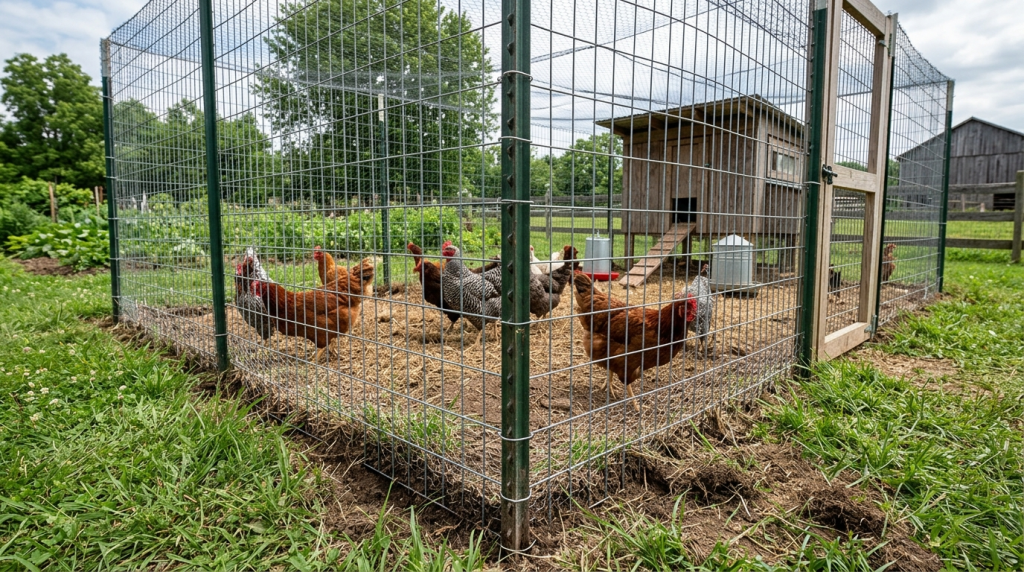
The Low Cost Chicken Run is where most people overspend. You don’t need expensive pressure-treated 4x4s for the run fence. T-posts (metal stakes) and poultry netting are much cheaper. However, to keep it a Low Cost Chicken Run that actually works, you must bury the bottom 6 inches of the fence in the ground to prevent digging predators.
If you are on an extreme budget, look for used chain-link fencing. People often tear it down to install privacy fences. While the gaps in chain link are too big to keep out weasels, you can zip-tie cheap bird netting over it for added security.
11. Transforming Scrap into a Cheap Chicken House
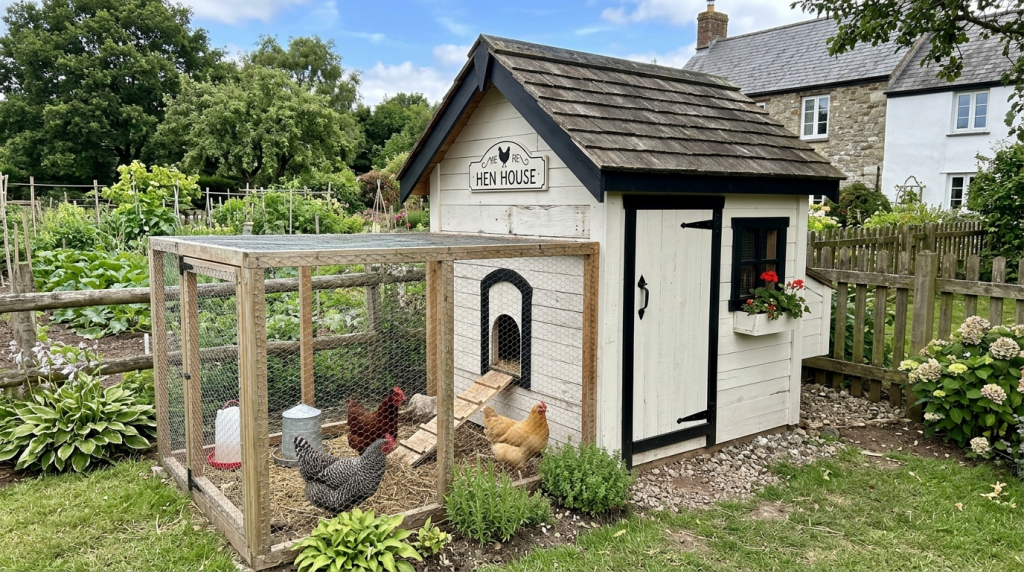
A Cheap Chicken House doesn’t have to look like a shanty. With a bucket of “oops” paint from the hardware store (paint that was mixed incorrectly and sold for a few dollars), you can make a scrap-wood coop look like a designer cottage.
Use old cabinets for nesting boxes. They are usually the perfect size and are built to be durable. Just remove the doors, lay them on their backs, and fill them with straw. [Internal Link: Managing Chicken Feed Costs]
12. Smart Cost Effective Chicken Coop Layouts
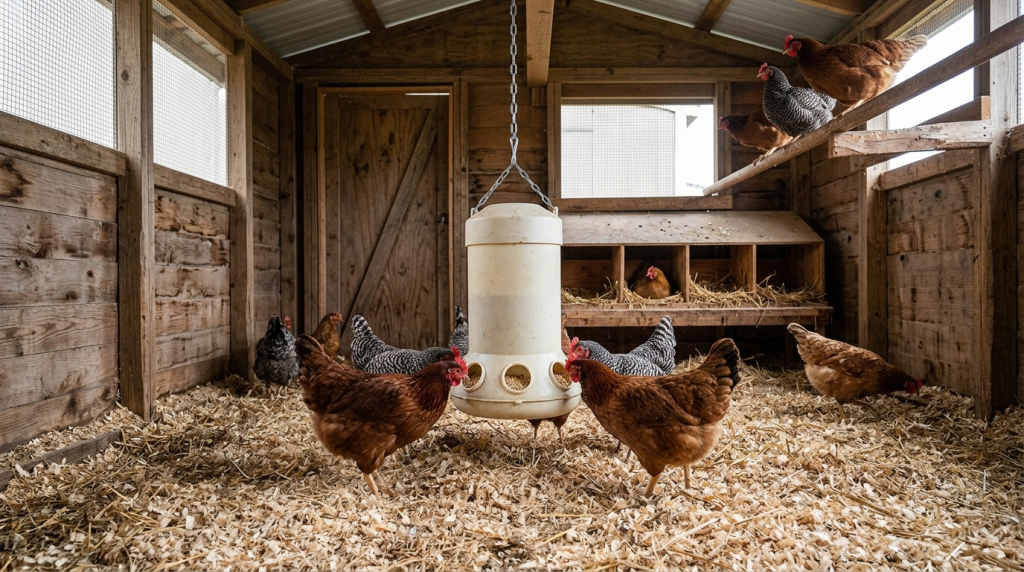
A Cost Effective Chicken Coop is one that minimizes waste. This means placing your waterers and feeders in a way that the birds can’t spill them or poop in them. Hanging your feeders at the height of the bird’s back is a simple trick that saves you roughly 20% on feed costs—money that eventually pays for the coop itself!
Also, consider the “deep litter method” for the floor. Instead of cleaning the coop every week, you add fresh pine shavings over the old ones. The waste composts in place, creating heat in the winter and amazing garden soil by spring.
13. Essential Features of a Cheapest Diy Chicken Coop

To build the Cheapest Diy Chicken Coop, focus on the essentials:
- Roosts: Use a sturdy branch from a tree (free!) rather than buying a wooden dowel.
- Flooring: Use an old piece of vinyl flooring or linoleum over your wood base. It makes cleaning a breeze and protects the wood from rotting.
- Locks: Don’t skimp here. Use carabiners or spring-loaded latches. Raccoons can open simple sliding bolts.
14. Managing Your Livestock with a Chicken Coop And Goat Pen

If you are expanding your homestead, a Chicken Coop And Goat Pen combo is a smart move. Chickens and goats are “biological buddies.” The chickens will pick through the goat’s bedding to eat fly larvae, which keeps the pest population down for the goats.
When building this shared space, ensure the chickens have a “high” place to escape to. Goats are curious and will try to eat chicken feed, which can be dangerous for them. A lofted coop inside the goat run is the perfect financial and spatial solution.
15. Setting Up a Basic Duck Coop on the Side

If you want to add ducks, a Duck Coop has slightly different requirements. Ducks don’t roost; they sleep on the ground. They also produce a lot of moisture. A budget-friendly duck setup can be as simple as a large, ventilated wooden crate with a ramp.
If you are building a Duck Coop alongside your chicken coop, ensure the floor is incredibly well-drained. Rubber mats or heavy-duty gravel are better than wood, which will rot quickly under a duck’s wet feet.
16. Finalizing Your Custom Chicken Coop Designs Diy

When you are finishing your Chicken Coop Designs Diy, think about ventilation. You need “soffit” style vents at the top of the walls. Hot, ammonia-filled air rises, and it needs a way out. If you don’t have good airflow, your birds will get respiratory issues, leading to expensive vet bills or lost hens.
Pro-tip: Use “hardware cloth” (square wire mesh) to cover every single opening. Standard “chicken wire” is only good for keeping chickens in; it is useless for keeping predators out.
17. Maintenance Tips for These Cheap Coop Ideas
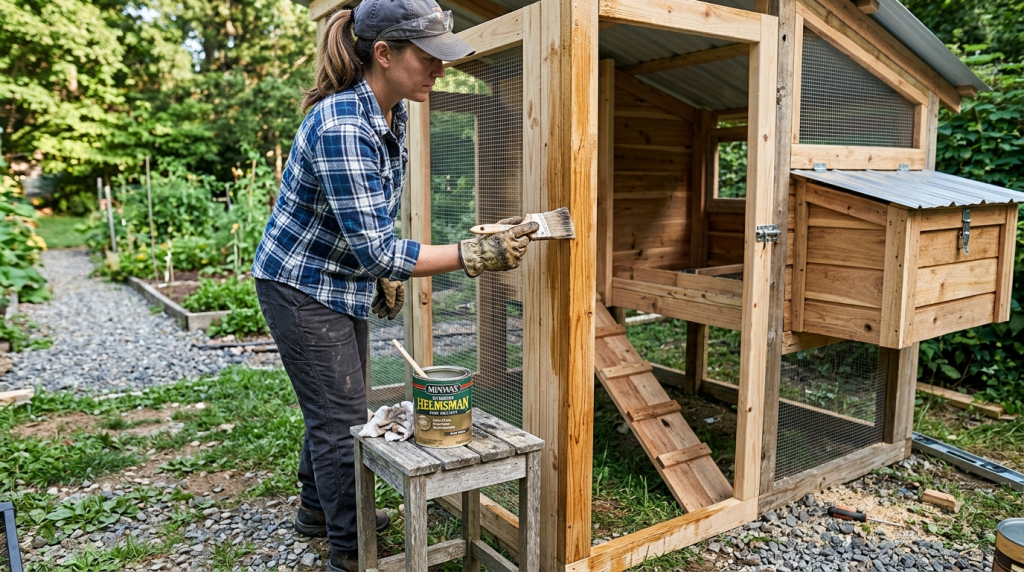
The key to keeping a Low Budget Chicken Coop functional for years is maintenance. Every six months, check for “soft spots” in the wood and apply a fresh coat of sealant or paint. Check your wire mesh for any signs of prying or rusting.
Since you saved money on the build, you can afford to buy a big bag of Diatomaceous Earth (DE). Sprinkling this in the cracks and crevices of your Low Cost Chicken Coop will kill mites and lice before they become an infestation.
18. Why a Low Cost Chicken Run is Essential for Egg Quality
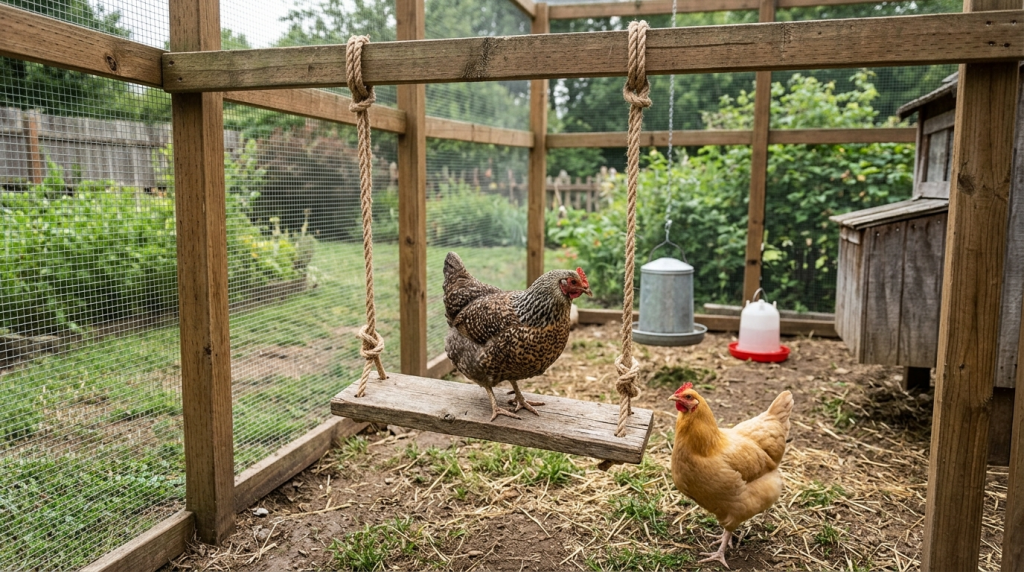
Finally, remember that the Low Cost Chicken Run is where your birds spend 90% of their time. If they are bored and cramped, they will peck at each other. Add “free” entertainment like an old wooden ladder for them to climb on, or hang a head of cabbage from a string.
Happy, active hens produce eggs with darker yolks and higher nutrient profiles. Your budget coop is more than just a box; it’s the engine of your backyard farm. By following these Low Budget Chicken Coop Ideas, you are not just saving $100 today; you are investing in a sustainable future.
FAQs
How much space does a chicken need in a low budget coop?
Each chicken needs about 3-4 square feet of interior space and 10 square feet of outdoor run space. If you are building Small Chicken Coops, prioritize vertical space to make the birds feel less crowded.
Can I build a chicken coop entirely out of pallets?
Yes, Chicken Coop Pallets are a primary material for budget builders. However, ensure they are heat-treated (marked HT) and not chemically treated. You will still need to buy hardware cloth for the windows and doors to ensure predator protection.
What is the most expensive part of a DIY coop?
Usually, the roofing and the predator-proof wire (hardware cloth) are the most expensive. To save money, look for Cheap Coop Ideas like using reclaimed metal roofing or converting an old garden shed into a Chicken Shed With Run.
Is chicken wire enough to protect my birds?
No. Chicken wire is designed to contain chickens, but predators like raccoons and foxes can tear right through it. For any Low Cost Chicken Run, always use 1/2-inch hardware cloth, especially around the bottom three feet of the structure.
Conclusion
Building a home for your flock doesn’t have to be a financial burden. From scavenging Chicken Coop Pallets to downloading free Diy Chicken Coop Plans, the resources for a Low Budget Chicken Coop are all around you. The most important factor isn’t how much you spend, but how well you protect your birds from the elements and predators. By repurposing old furniture into a Cheap Chicken House and using smart Low Cost Chicken Run techniques, you can enjoy the rewards of fresh eggs for a fraction of the retail cost. Grab your drill, find some scrap wood, and start building your backyard dream today.

James Mitchell is the founder and sole creator behind Logic and Liquidity. With a deep passion for both finance and interior design, James manages every aspect of the website—from writing in-depth blog posts to handling strategy, operations, and content creation. His mission is to help homeowners see their spaces through a financial lens, proving that great design is a smart investment.