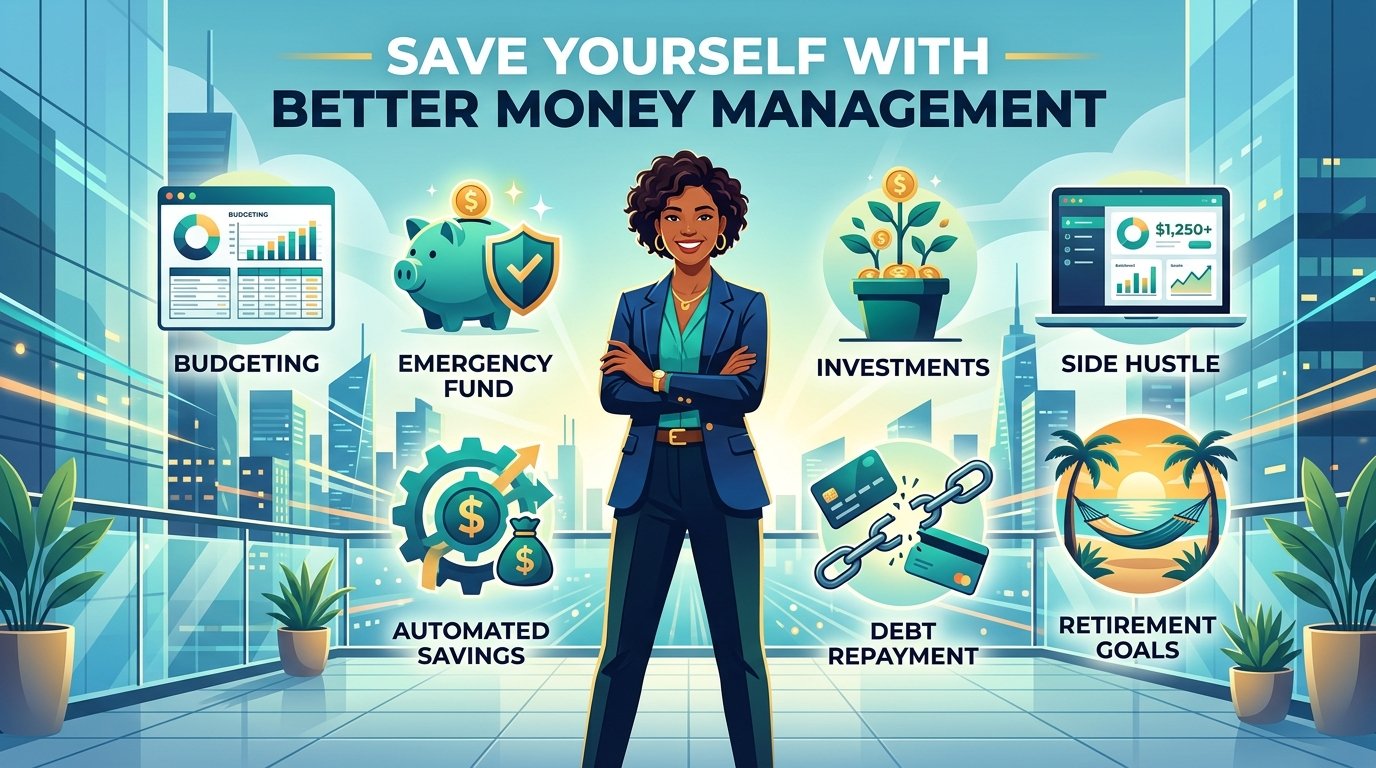
Money. It flows in, it flows out — and for most people, far too much of it disappears before they ever figure out where it went. Whether you are living paycheck to paycheck, juggling multiple financial obligations, or simply feeling anxious about your financial future, the solution often comes down to one fundamental truth: better money management can save you. Not just financially, but from stress, uncertainty, and the feeling of being out of control.
The good news is that you do not need a finance degree or a six-figure salary to turn things around. What you need is a clear strategy, consistent habits, and the willingness to take control of your financial life one step at a time. This blog walks you through seven powerful, proven strategies that can help you transform how you handle money — starting today.
From creating a realistic budget to planning for a secure retirement, each strategy builds on the last, forming a complete financial foundation that can carry you through every stage of life. Whether you are just starting out or looking to course-correct after years of financial missteps, these principles apply to everyone.
Executive Summary
Managing money effectively is not about deprivation — it is about direction. This blog outlines seven key strategies for better money management: creating a realistic budget, building a solid emergency fund, automating your savings, reducing high-interest debt, investing consistently for the future, diversifying income through side hustles, and planning for a secure retirement. Together, these strategies form a comprehensive personal finance roadmap that helps you save more, stress less, and build lasting wealth. Each section provides actionable insights, practical tips, and a clear understanding of why each step matters. By the end, you will have everything you need to take control of your finances and save yourself from the cycle of financial anxiety.
1. Create a Realistic Budget

The foundation of every successful financial plan starts with a realistic budget. A budget is not a restriction — it is a roadmap that tells your money where to go instead of wondering where it went. Without one, even high earners can find themselves financially stranded at the end of each month.
Creating a realistic budget means taking an honest look at your income and expenses. Start by listing all sources of monthly income — your salary, freelance work, rental income, or any other earnings. Then, track every expense: rent or mortgage, utilities, groceries, transportation, subscriptions, dining out, and even that daily coffee. Most people are genuinely surprised by where their money actually goes.
One of the most popular and effective budgeting frameworks is the 50/30/20 rule: allocate 50% of your income to needs (housing, food, utilities), 30% to wants (entertainment, dining, travel), and 20% to savings and debt repayment. This simple structure provides balance without being overly restrictive.
Digital tools like Mint, YNAB (You Need A Budget), or even a simple spreadsheet can make budgeting easier and more sustainable. The key is consistency — review your budget weekly, adjust monthly, and keep it realistic. A budget you actually follow beats a perfect one you abandon in two weeks.
Learn how to choose the best budgeting app for your lifestyle to make this process even easier. When your budget reflects your true financial picture, you gain clarity, reduce overspending, and start making progress toward every other financial goal on this list.
2. Build a Solid Emergency Fund
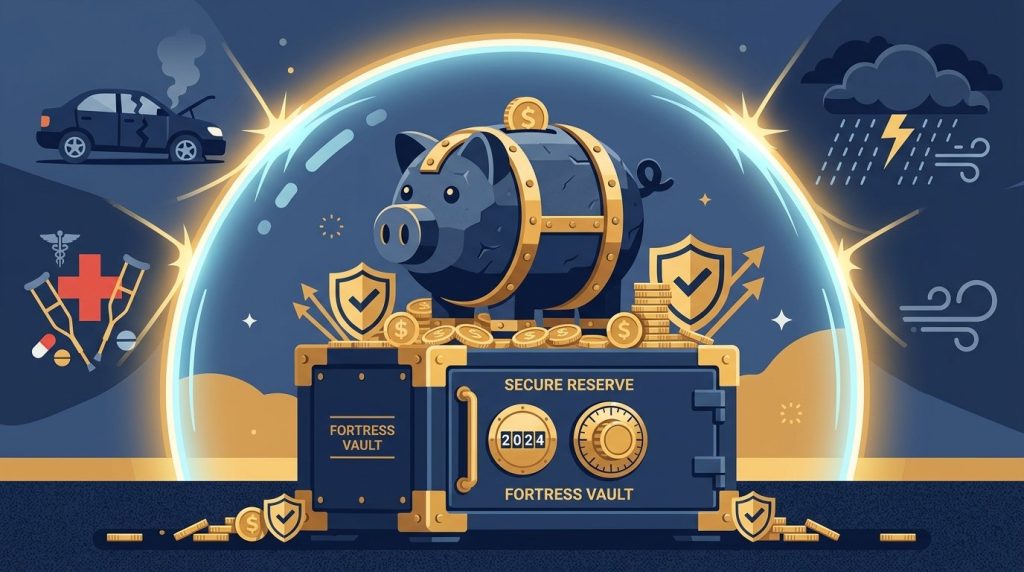
Life is unpredictable. A sudden job loss, a medical emergency, a car breakdown, or an unexpected home repair can completely derail even the most carefully laid financial plans — unless you have a solid emergency fund in place.
An emergency fund is a dedicated savings buffer that exists for one purpose: to protect you when life throws you a curveball. Financial experts consistently recommend saving between three to six months’ worth of living expenses in a liquid, easily accessible account — such as a high-yield savings account. If your monthly expenses are $3,000, your emergency fund goal should be between $9,000 and $18,000.
Building this fund may seem daunting, but the key is to start small and stay consistent. Even saving $25 or $50 a week will build meaningful reserves over time. Treat your emergency fund contributions like a non-negotiable bill — pay it first, every month.
Why is this so critical? Because without an emergency fund, any financial setback forces you to rely on credit cards or loans, which carries high interest costs and often creates a debt spiral that is difficult to escape. Your emergency fund is your financial insurance policy.
Discover the best high-yield savings accounts available right now to make your emergency fund work harder for you. When your budget reflects your true financial picture, you gain clarity, reduce overspending, and start making progress toward every other financial goal on this list.
3. Automate Your Savings
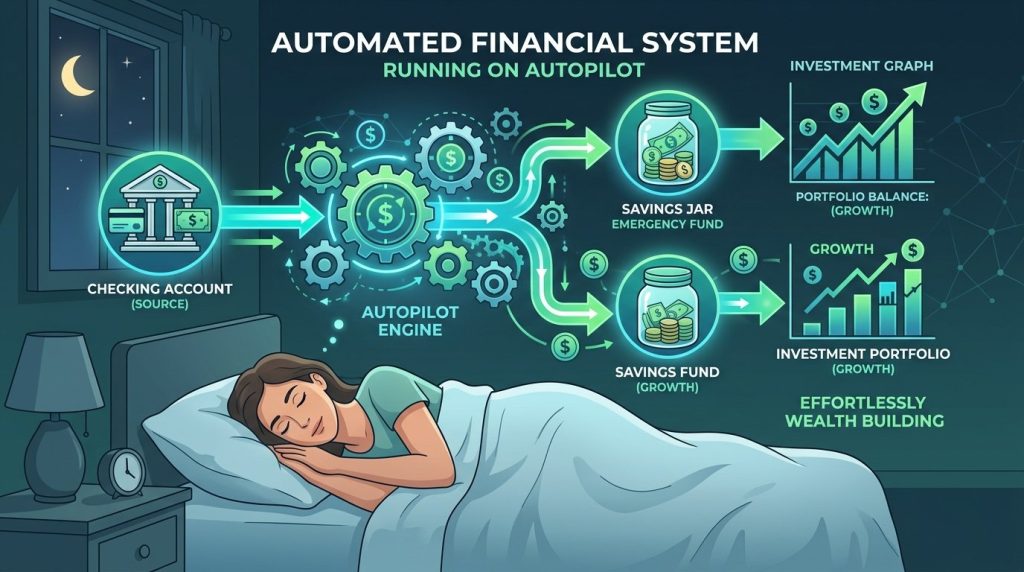
One of the most powerful shifts you can make in your financial life is to stop relying on willpower and start automating your savings. Human beings are not wired to consistently delay gratification — we spend what we see. Automation removes that temptation entirely.
Automating your savings means setting up automatic transfers from your checking account to your savings or investment accounts on a scheduled basis — ideally right after each payday. This “pay yourself first” approach ensures that saving happens before you have a chance to spend.
Most banks and financial apps allow you to schedule automatic transfers in minutes. You can also automate contributions to retirement accounts like a 401(k) or IRA, ensuring that long-term investing happens consistently without requiring active decision-making.
The results of automation are remarkable. Studies in behavioral finance consistently show that people who automate their savings accumulate significantly more wealth over time compared to those who save whatever is “left over” at the end of the month — because there rarely is anything left over.
Read our guide on how to set up automatic savings and investment contributions to get started today. Start with whatever amount is comfortable — even 5% of your income — and gradually increase it by 1% every few months. Over time, you will barely notice the difference in your spending, but your savings account will tell a very different story.
4. Reduce High-Interest Debt

High-interest debt is one of the most significant obstacles to financial freedom. Credit card balances, payday loans, and other high-interest obligations can drain hundreds or even thousands of dollars from your finances every year — money that could otherwise be working for you.
The first step to reducing high-interest debt is understanding what you owe. List every debt, its balance, interest rate, and minimum payment. This gives you a complete picture of the problem and helps you develop a targeted elimination strategy.
Two of the most widely used debt payoff methods are:
- The Avalanche Method: Focus on paying off the debt with the highest interest rate first while making minimum payments on all others. This saves the most money in interest over time.
- The Snowball Method: Focus on paying off the smallest balance first for quick psychological wins that build momentum and motivation.
Both methods work — the best one is the one you will actually stick with. Many financial advisors recommend combining both approaches: use the snowball method to eliminate a small debt quickly, then switch to avalanche for the remaining high-interest balances.
Additionally, consider balance transfer credit cards or personal loans with lower interest rates to consolidate debt. Reducing your interest rate even by a few percentage points can save you significant money and help you pay off debt faster.
Check out our detailed breakdown of the best debt payoff strategies for every personality type to find your perfect fit. Every dollar you free from high-interest debt is a dollar that can be redirected toward savings, investment, and wealth building. Getting out of debt is not just a financial decision — it is a life-changing one.
5. Invest Consistently for the Future

Saving money is essential, but investing is how you build real wealth. The difference between saving and investing comes down to one powerful concept: compound interest — the ability of your money to generate returns on top of returns, growing exponentially over time.
Investing consistently for the future means making regular contributions to investment vehicles regardless of market conditions. This strategy, known as dollar-cost averaging, reduces the risk of investing a lump sum at the wrong time by spreading purchases across time, buying more shares when prices are low and fewer when prices are high.
For most people, the best starting point for long-term investing is through employer-sponsored retirement plans like a 401(k) — especially if your employer offers matching contributions. Always contribute at least enough to capture the full employer match; failing to do so is essentially leaving free money on the table.
Beyond retirement accounts, consider investing in index funds, ETFs (exchange-traded funds), or mutual funds through platforms like Fidelity, Vanguard, or Charles Schwab. These low-cost, diversified instruments provide broad market exposure and have historically outperformed actively managed funds over the long term.
The most important principle in investing is time in the market, not timing the market. Starting early — even with small amounts — gives compound interest the time it needs to work its magic. A $200 monthly investment starting at age 25 can grow to over $500,000 by retirement age, assuming a modest 7% annual return. Explore our beginner’s guide to investing in index funds and ETFs for long-term wealth to start building your portfolio today.
6. Diversify Income (Side Hustles)
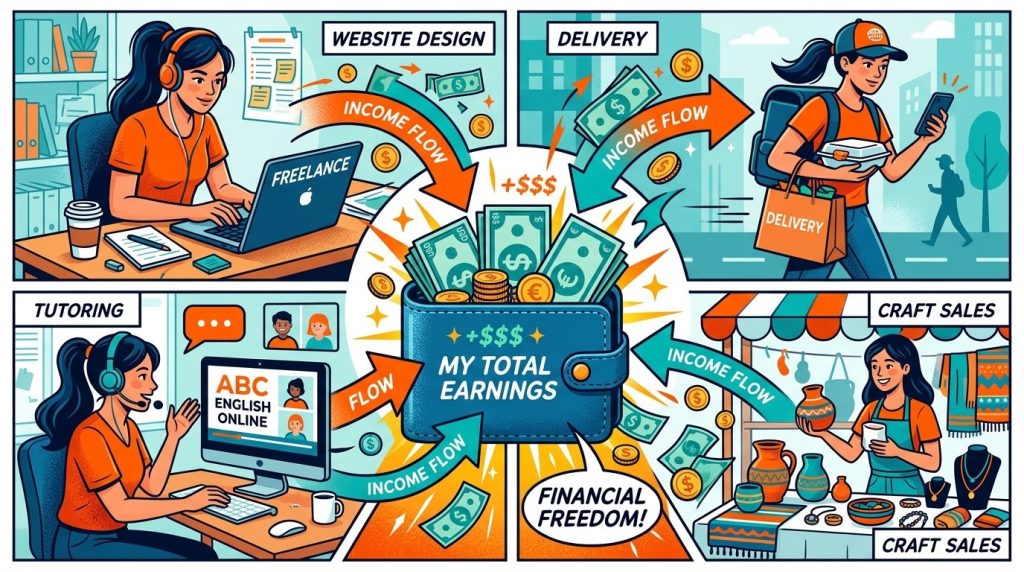
Relying on a single income source is one of the greatest financial risks in the modern economy. Job markets are volatile, industries evolve, and unexpected disruptions — like a global pandemic or an economic recession — can eliminate income overnight. Diversifying your income through side hustles is one of the smartest financial moves you can make.
A side hustle is any income-generating activity outside your primary job. The options are virtually limitless: freelance writing, graphic design, web development, tutoring, food delivery, reselling products online, creating digital courses, starting a YouTube channel, or monetizing a hobby. The key is to choose something that aligns with your skills, interests, and available time.
Even a modest side income of $300–$500 per month can significantly accelerate your financial goals. Applied strategically, side hustle income can be used to build your emergency fund faster, pay down debt, fund your investment accounts, or simply expand your financial safety net.
The digital economy has made side hustles more accessible than ever. Platforms like Upwork, Fiverr, Etsy, Airbnb, and Teachable allow virtually anyone to monetize their skills and knowledge with minimal startup costs.
Browse our curated list of the best side hustles to start in 2025 based on your skills and start diversifying your income today. The goal is not to work yourself to exhaustion but to create multiple streams of income that reduce your dependence on any single source. Financial resilience comes from having options — and side hustles give you exactly that.
7. Plan for a Secure Retirement

No matter your age, it is never too early — or too late — to plan for a secure retirement. Retirement planning is the long game of personal finance, and the decisions you make today will directly determine the quality of life you experience in your later years.
The foundation of retirement planning begins with understanding how much you will actually need. A common rule of thumb is the 25x rule: to retire comfortably, you need to have saved 25 times your annual expenses. If you plan to spend $50,000 per year in retirement, you need a retirement nest egg of approximately $1.25 million.
Maximize contributions to tax-advantaged retirement accounts like a 401(k), Roth IRA, or traditional IRA. As of 2024, the contribution limit for a 401(k) is $23,000 per year ($30,500 for those 50 and older). These accounts offer significant tax benefits — either tax-free growth (Roth) or tax-deferred growth (traditional) — that dramatically accelerate wealth accumulation over time.
Social Security will likely provide some retirement income, but it is rarely enough to maintain your pre-retirement lifestyle on its own. Think of it as a supplement, not a foundation. Your personal savings and investments must do the heavy lifting.
If you are starting late, do not be discouraged. Increasing your savings rate, reducing lifestyle expenses, working a few extra years, or pursuing higher-earning opportunities can all significantly improve your retirement outlook. A certified financial planner (CFP) can help you model different scenarios and create a personalized retirement strategy.
Read our step-by-step guide to building a retirement plan from scratch at any age and secure your future today. Planning for retirement is the ultimate act of self-care — it is how you ensure that your future self has choices, freedom, and financial security.
FAQs
What is the most important first step in better money management?
The most important first step is creating a realistic budget. Without understanding where your money is going, every other financial strategy becomes harder to implement. A budget gives you clarity, control, and a foundation for all other financial decisions.
How much should I have in my emergency fund?
Financial experts recommend saving between three to six months’ worth of living expenses in a liquid, accessible account. The exact amount depends on your job security, family situation, and monthly obligations. If you are self-employed or have variable income, aiming for six months or more is wise.
Is it better to pay off debt or invest first?
It depends on the interest rates involved. If your debt carries a high interest rate (above 6–7%), it is generally better to pay it off before investing aggressively. If your debt has a low interest rate, it can make sense to do both simultaneously — particularly if your employer offers a 401(k) match, which you should always capture.
How do I start investing with a small amount of money?
Many investment platforms now allow you to start investing with as little as $1 through fractional shares or low-minimum index funds. Apps like Acorns, Robinhood, or Fidelity make getting started accessible regardless of your income level. The key is to begin — even small investments grow meaningfully over time.
What are the best side hustles for beginners?
Great beginner-friendly side hustles include freelance writing, virtual assistance, tutoring, food or grocery delivery, reselling items online, and completing surveys or user testing. The best option depends on your available time, skills, and financial goals.
When should I start planning for retirement?
The answer is simple: right now. The earlier you begin, the more time compound interest has to work in your favor. Even saving a small amount in your 20s can outperform larger contributions made in your 40s, thanks to decades of compounding growth.
How can I automate my savings effectively?
Set up automatic transfers from your checking account to a dedicated savings or investment account on the same day you receive your paycheck. Start with a manageable percentage — even 5% — and increase it gradually. Most banks and budgeting apps make this process straightforward and highly customizable.
Conclusion
Better money management is not a destination — it is a journey made up of consistent, intentional decisions that compound over time. The seven strategies outlined in this blog — creating a realistic budget, building a solid emergency fund, automating your savings, reducing high-interest debt, investing consistently for the future, diversifying income through side hustles, and planning for a secure retirement — are not just financial tactics. They are the building blocks of a financially free, stress-reduced, and purposeful life.
You do not have to implement all seven strategies at once. Start with the one that resonates most or addresses your most pressing financial challenge. Build one habit at a time. Celebrate small wins. Stay consistent even when progress feels slow.
The truth is, your financial future is not determined by how much money you make. It is determined by how intentionally you manage the money you have. Take the first step today — your future self will thank you.

James Mitchell is the founder and sole creator behind Logic and Liquidity. With a deep passion for both finance and interior design, James manages every aspect of the website—from writing in-depth blog posts to handling strategy, operations, and content creation. His mission is to help homeowners see their spaces through a financial lens, proving that great design is a smart investment.