

There is something inherently romantic about the idea of a garden that never wilts. While fresh flowers bring a fleeting beauty to a room, the art of French Beading allows you to capture the delicate structure of nature in a medium that lasts for generations. This isn’t just a hobby; it is a meticulous craft that dates back centuries, once used by peasants to create funeral wreaths and later adopted by the Victorian elite to adorn their parlors. Today, it stands as a testament to patience and the incredible things one can create with just a bit of wire and a handful of tiny glass spheres.
Many people look at an intricate Beaded Bouquet and assume it requires a massive financial investment or a professional studio. In reality, you can start your journey into French Beading with an investment of less than $15. By sourcing materials wisely and mastering a few fundamental Beading Techniques, you can transform simple glass seed beads into heirloom-quality art. Whether you are looking for a meditative weekend project or a unique gift idea, this guide will show you how to navigate the world of wire-based florals without breaking the bank.
Executive Summary
In this expansive guide to French Beading, we cover everything from the historical roots of the craft to the modern financial strategies for sourcing affordable Beads And Wire. We explore the essential Beading Techniques—including the Continuous Loop and Basic Frame methods—that form the backbone of all French Floral Beading. You will find a variety of Bead Patterns ranging from beginner-friendly clovers to advanced lilies. We also provide a Mini Beaded Flower Bouquet Tutorial designed to be completed for under $10, along with a deep dive into Beaded Flower Ideas for home decor and weddings. By the end of this article, you will have the knowledge and the “How-To” steps to build your own eternal garden.
1. The Victorian Roots of French Flower Beading
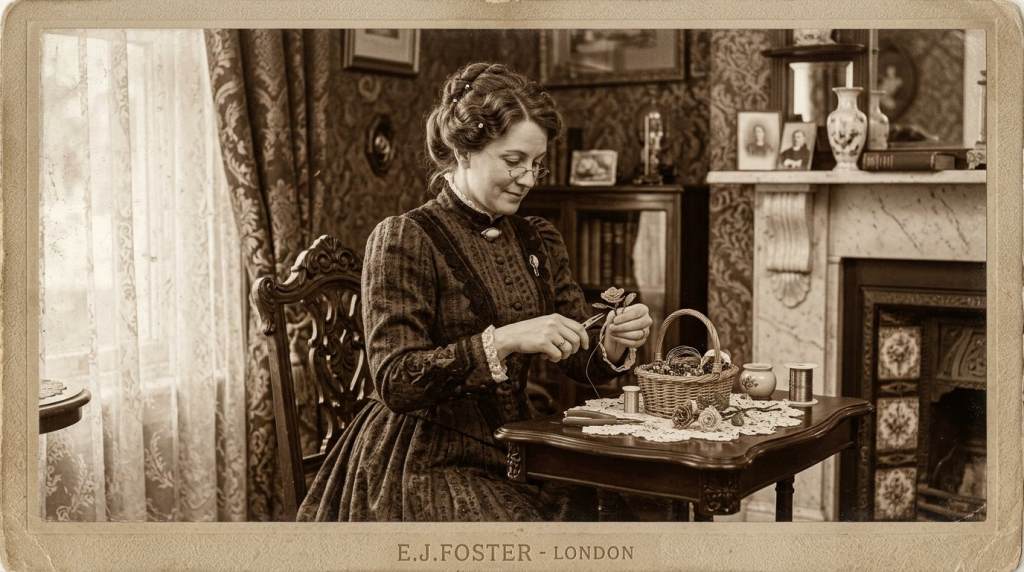
The history of French Flower Beading is as colorful as the beads themselves. While the name suggests a purely French origin, the craft actually flourished throughout Italy and England during the 18th and 19th centuries. Originally, these flowers were crafted by the “flower girls” of the era using discarded beads from high-fashion garment factories. Today, we carry on this tradition by turning small components into grand designs. Understanding the history helps us appreciate the “human touch” required in this art form. Every twist of the wire is a connection to a craftswoman from three hundred years ago who was likely making the exact same petal shape you are today.
2. Essential Materials For Beginners: Beads and Wire
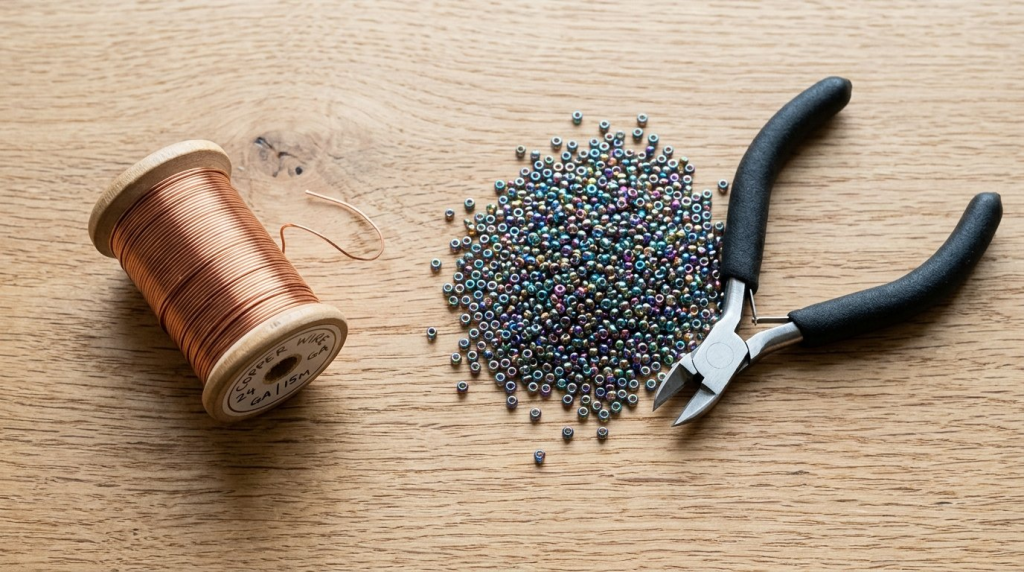
To begin, you don’t need a warehouse of supplies. The core of this craft is simply Beads And Wire. For most French Beading projects, you will want size 11/0 seed beads. These are the perfect balance between detail and ease of use. As for the wire, a 24-gauge or 26-gauge copper-core wire is the industry standard. Copper is preferred because it is “dead soft,” meaning it bends easily and stays in place without snapping. A 100-foot spool of wire typically costs about $4, and a large bag of seed beads can be found for $5 to $7. This leaves you with plenty of room in your $15 budget for a pair of basic wire cutters from the hardware store.
3. Why Beaded Crafts are the Ultimate Budget Hobby
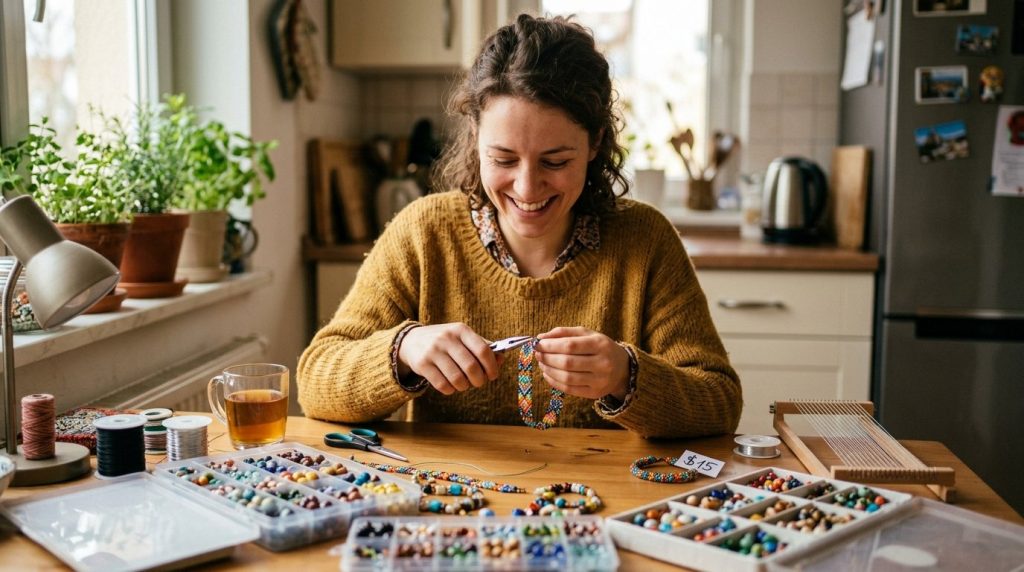
In a world where digital entertainment is expensive and fleeting, Beaded Crafts offer a tangible return on investment. The cost-per-hour of entertainment in French Beading is incredibly low. A single $15 kit can provide 10 to 20 hours of focused, creative engagement. Furthermore, the finished products have a high perceived value. A handmade Beaded French Flowers arrangement can sell at craft fairs for five to ten times the cost of the materials. [Internal Link: Managing Your Crafting Budget]. If you are looking for a hobby that pays for itself, mastering the art of the bead is a statistically sound choice.
4. Fundamental Beading Techniques Every Artist Must Know
Before you dive into a complex French Beaded Flower Tutorial, you must master the two pillars of the craft: The Continuous Loop and the Basic Frame. The Continuous Loop technique is used for small, delicate flowers like lavender or baby’s breath. The Basic Frame (or “Wrap”) is used to create larger, solid petals like those found on roses or lilies. Mastering these Beading Techniques is like learning the scales on a piano; once you know them, you can play—or build—almost anything. Most beginners find the loop method easier to start with as it requires less wire management and offers instant gratification.
5. Navigating Bead Patterns Without Getting Confused
Reading Bead Patterns can feel like deciphering a secret code. You might see instructions like “4-row BF with 15 beads on the basic.” This simply means a Basic Frame with a center row of 15 beads and four rows of wrapping. When you are just starting, look for patterns that use “bead counts” rather than measurements in inches. Bead counts are more accurate for beginners because bead sizes can vary slightly between manufacturers. A good pattern will also specify the “wire count,” telling you exactly how many pieces of wire to cut so you don’t waste your precious $15 worth of materials.
6. Sourcing Seed Bead Art Ideas From Nature
The best teacher for French Beading is your own backyard. Seed Bead Art Ideas often come from looking at the geometry of real plants. Notice how a daisy’s petals radiate from the center, or how a succulent’s leaves are tiered. You can translate these natural observations into beadwork by adjusting the number of rows in your Basic Frame. Try taking a photo of a wildflower and zooming in on the petal shape. Can you replicate that teardrop shape with a “pointed top” technique? This organic approach to design is what separates a generic craft project from a work of art.
7. The Rise of French Floral Beading in Modern Decor
We are seeing a massive resurgence in French Floral Beading in modern interior design. In 2026, the trend is moving away from plastic “faux” plants toward “Artisanal Textures.” A single Beaded French Flowers stem placed in a minimalist bud vase creates a striking focal point that draws the eye. Because glass beads catch and refract light, these flowers change appearance throughout the day as the sun moves across the room. They add a layer of sophistication to a coffee table or bookshelf that a mass-produced silk flower simply cannot match.
8. Where to Find the Best Beading Tutorials Online
You don’t need an expensive in-person class to learn this skill. There are thousands of free Beading Tutorials available on platforms like YouTube and Pinterest. When searching for a tutorial, look for those that show the “bottom of the flower.” A good teacher will show you how to tidy up the wire “legs” so the flower stands straight. [Internal Link: Our Top 10 Online Learning Resources]. Avoid tutorials that use glue; true French Beading relies entirely on the structural integrity of the wire. If the teacher is using glue, they are likely taking shortcuts that will lead to a flimsy finished product.
9. Mastering the Art of Beaded French Flowers
When people talk about Beaded French Flowers, they are usually referring to the classic “Victorian Rose.” This is the “final boss” of many beginners. It involves creating multiple layers of petals—starting with small inner petals and moving to larger outer ones. The trick to a realistic rose is the “shading.” Use three different shades of the same color bead (light, medium, and dark) and mix them on your wire. This creates a “trompe l’oeil” effect that gives the flower depth and makes the glass look like velvet from a distance.
10. Creative Beaded Flower Ideas for Special Occasions
While home decor is the most common use for this craft, the list of Beaded Flower Ideas is endless. Consider making a “Mother’s Day Corsage” that she can keep forever. Or, create beaded “Place Card Holders” for a dinner party where the guest’s name is tucked into a small beaded sunflower. Because you are working with Beads And Wire, these items are surprisingly durable. They can be packed away in a box and brought out year after year, making them perfect for recurring holiday decorations or sentimental anniversary gifts.
11. Creating a Mini Beaded Flower Bouquet Tutorial for $10
If you want to test the waters, this Mini Beaded Flower Bouquet Tutorial is the perfect entry point.
- Materials: 1 tube of size 11/0 beads ($3), 1 spool of 26g wire ($4), 1 roll of green floral tape ($2).
- Step 1: String 50 beads onto the wire (don’t cut the wire yet!).
- Step 2: Make a small loop of 10 beads and twist the wire twice.
- Step 3: Make 4 more loops of 10 beads right next to the first one to create a star shape.
- Step 4: Repeat this 5 times to create 5 small “Forget-Me-Not” flowers.
- Step 5: Bundle the stems together and wrap with floral tape. You now have a miniature bouquet that costs less than a latte and will last forever.
12. Advanced Beaded Flowers How To: Adding Texture
Once you are comfortable with the basics, your Beaded Flowers How To should move into “Decorative Edges.” You can add a “Lace Edge” to a petal by using a contrasting color bead on the very last row of your wrap. You can also “sculpt” your petals after they are finished. Glass and wire are remarkably flexible; by gently curving the petal over your thumb, you can give a flat flower a sense of movement and “breath.” This is the secret to making your French Beading look like it is caught in a gentle breeze.
13. The Ultimate French Beaded Flower Tutorial: The Lily
The Calla Lily is a staple of French Floral Beading. Unlike the rose, which has many parts, the lily is often one large, continuous wrap. The challenge here is the “Wasp Waist” technique—pinching the wire at the base to create a flared top. In a high-quality French Beaded Flower Tutorial, you will learn how to use a “Heavy Gauge” support wire in the center to keep the large petal from flopping over. A beaded lily is a statement piece that demonstrates a high level of technical skill and patience.
14. Constructing a Professional Beaded Bouquet
A full Beaded Bouquet is a masterpiece of engineering. Unlike real flowers, beaded flowers are heavy. A wedding-sized bouquet can weigh 3 to 5 pounds! To build one, you need to “tier” your stems and use a central handle made of thick 16-gauge wire. You can also integrate other Beaded Crafts like beaded leaves or “filler” pearls to hide the structural wires. Many modern brides are choosing beaded bouquets because they double as a centerpiece for the head table and a permanent memento of the wedding day.
15. The Financial Side of Selling Beaded Crafts
If you decide to turn your hobby into a side hustle, Beaded Crafts are a high-margin product. Because the raw material cost is so low (under $15 for several stems), the majority of your price is “labor value.” In 2026, a single hand-beaded flower stem can retail for $25 to $45 on sites like Etsy or at local boutiques. The key to profitability is speed. Using a “Spin-a-Bead” (a wooden bowl that strings beads onto wire automatically) can cut your production time in half, allowing you to earn a respectable hourly wage from your art.
16. Maintenance and Cleaning of French Beaded Flowers
One of the biggest questions about French Beading is: “How do I clean them?” Unlike silk flowers, which trap dust in the fabric, glass beads can be easily refreshed. A simple blast of canned air (the kind used for keyboards) will remove most dust. For deeper cleans, you can actually dip the flowers in cool, soapy water and let them air dry—provided you used tarnish-resistant or stainless steel wire. This durability is why French Floral Beading is often found in antique shops in near-perfect condition, even after 50 years of display.
17. Sourcing Bulk Beads on a Tiny Budget
To keep your projects under that $15 mark, you have to be a savvy shopper. Avoid buying “designer” brand beads (like Miyuki or Toho) for your first few projects; instead, look for “Czech Seed Beads” which are sold in large hanks and are much cheaper. You can often find incredible deals at estate sales or on eBay where former crafters are selling off their “stash” for pennies on the dollar. Remember, in French Beading, a slight irregularity in bead size actually adds to the organic, “real” look of the flower.
18. Integrating French Beading into Your Wellness Routine
Finally, let’s talk about the mental health benefits of French Beading. Like knitting or adult coloring books, the repetitive motion of stringing beads and twisting wire has been shown to lower cortisol levels and induce a “flow state.” It is a quiet, screen-free activity that results in a beautiful physical object. In our fast-paced 2026 world, spending an hour on a French Beaded Flower Tutorial is a form of digital detox that nourishes the soul while decorating your home.
FAQs
Does French beading require special tools?
Actually, no! You can get started with just a pair of wire cutters and a ruler. As you get more advanced, a “bead spinner” is helpful to speed up the stringing process, but it isn’t strictly necessary for your first few Beaded Crafts.
What is the best wire for French Beading?
For almost all Beaded Flower Ideas, 24 or 26 gauge copper wire is the best. It’s strong enough to hold the weight of the beads but soft enough to twist by hand without needing pliers.
Can I make a full wedding bouquet for under $50?
Yes! If you buy your beads in bulk hanks and your wire in large spools, the material cost for a full Beaded Bouquet is surprisingly low. The “cost” is primarily your time, as a full bouquet can take 40+ hours to complete.
Are beaded flowers fragile?
They are much sturdier than they look. Because they are made of Beads And Wire, they won’t shatter if dropped, and they won’t wilt in the heat. They are much more durable than dried or silk flowers.
Conclusion
The world of French Beading is one of infinite possibility and surprisingly low barriers to entry. By mastering a few core Beading Techniques and following a simple French Beaded Flower Tutorial, you can create stunning, permanent art for less than the cost of a movie ticket. Whether you are building a single stem for a friend or an entire Beaded Bouquet for a milestone event, the process is as rewarding as the result. Start small, keep your budget under $15, and watch as your skills—and your glass garden—begin to bloom.