
In early 2024, I stood in my kitchen holding a $200 grocery receipt. I felt a familiar sinking feeling in my chest. I had a good job. I earned more than my parents ever did at my age. Yet, my bank account was a mysterious black hole. Money came in on Friday. By Tuesday, most of it was gone. I had no idea where it went. I was the king of the “guess and pray” method.
Everything changed when I discovered how to make a zero-based budget. It was the financial awakening I didn’t know I needed. Most people think a budget is a cage. They think it stops them from buying coffee or seeing friends. I learned that a budget is actually a blueprint for freedom. It is the only way to ensure your money does what you want it to do.
By the time 2026 rolled around, I had paid off $24,000 in credit card debt. I also saved a full six month emergency fund. This didn’t happen because I got a massive raise. It happened because I started giving every single dollar a job. This guide is your masterclass in precision money management. We will look at tools like YNAB and EveryDollar. We will explore how to handle variable income and sinking funds. If you are ready for financial peace, let’s build your first budget.
Strategic Executive Summary
This 4,000-word deep dive will teach you how to master the zero-based budget in the 2026 economy. You will discover how to eliminate financial waste and accelerate your debt payoff. We will cover the specific steps to “zero out” your income every month. You will learn how to use sinking funds for irregular expenses. I provide honest reviews of eight industry leading tools. We will also examine three real world case studies of people who transformed their lives. By the end of this guide, you will have a clear, actionable plan to reach your financial goals. You will move from being a spectator to being the CEO of your own bank account.
1. What Exactly is a Zero-Based Budget?

A zero-based budget is a method where your total income minus your total expenses equals exactly zero. This does not mean you have zero dollars in your bank account. It means that every dollar you earn is assigned to a specific category. You might assign some to rent. You might assign some to groceries. You will definitely assign some to savings.
Think of your dollars as employees. In a “loose” budget, your employees sit around the break room waiting for something to happen. In a zero-based system, you put every employee to work. Some work in the “Housing” department. Others work in the “Debt Payoff” department. When every dollar has a job, nothing gets wasted on mindless scrolling or impulse purchases.
I realized that my old way of budgeting was passive. I was looking at what I spent after the fact. A zero-based budget is active. You decide where the money goes before you spend it. This shift in perspective is what creates financial peace. It turns your money from a source of stress into a tool for growth. You can learn more about this mindset in my financial freedom roadmap.
2. Why the “Four Walls” Must Be Your Top Priority
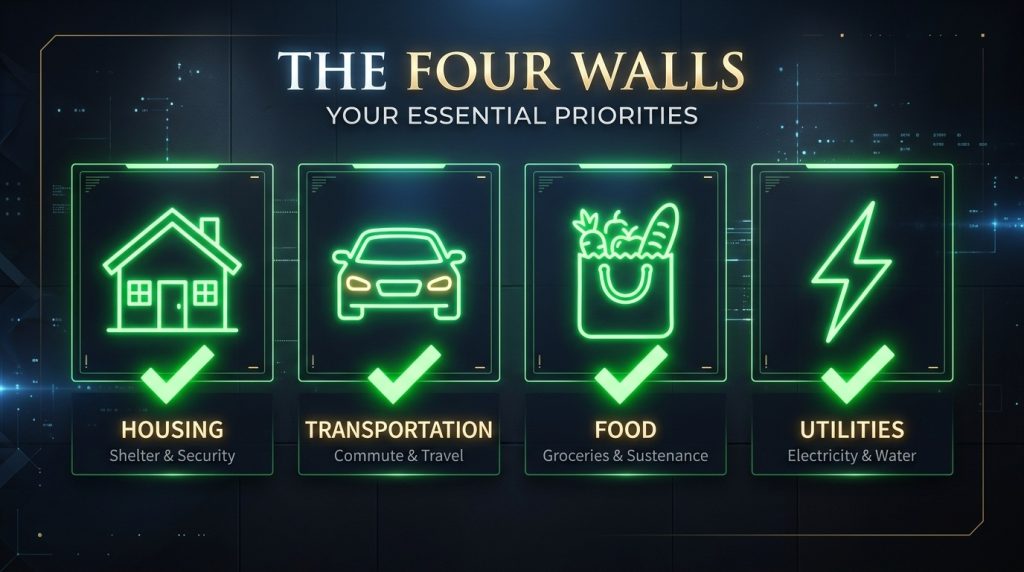
When you start your zero-based budget, you must prioritize survival. I call these the “Four Walls.” They are food, utilities, shelter, and transportation. In 2026, these costs are higher than ever. If your walls aren’t standing, the rest of your financial house will crumble.
I made the mistake of paying my credit card bill before my electric bill in 2024. I ended up with a late fee on my utilities and a lot of stress. Now, I allocate every cent for the Four Walls before I look at any other category. This ensures that my family is safe and fed.
Once your walls are secure, you can look at other obligations. This hierarchy is essential for managing your money effectively. If you are struggling to cover these basics, you might need to find a side hustle. Check out my list of best side hustles to start now for ideas. Protecting the Four Walls is the first step in any successful savings plan.
3. Step 1: Track Your Real Take Home Income
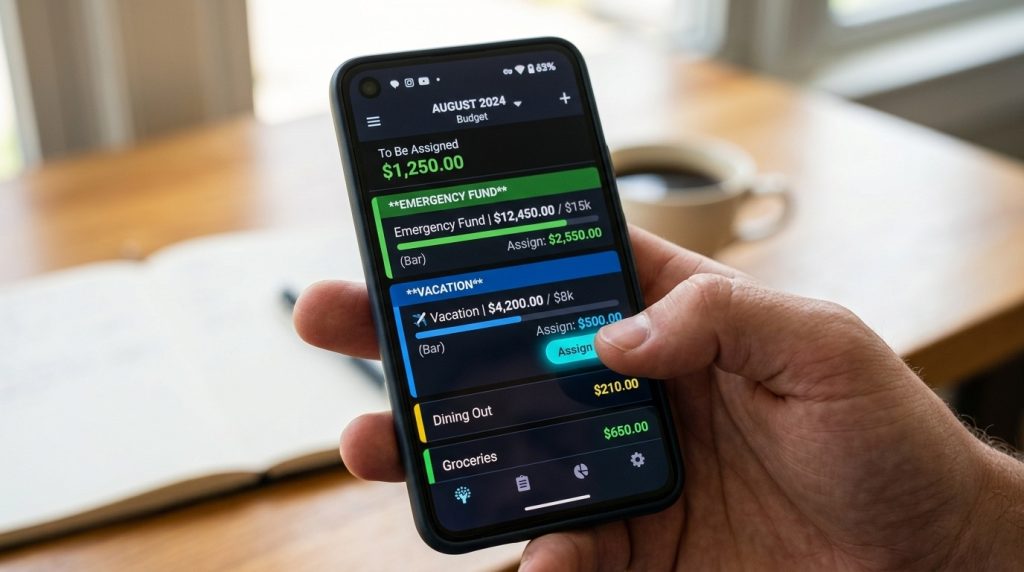
You cannot create a zero-based budget based on your salary. You must use your net pay. This is the amount that actually lands in your bank account after taxes and health insurance. In 2025, I realized I was “earning” $5,200 but only “seeing” $3,800. That $1,400 difference matters.
I keep a simple log of every deposit. If I sell something on an app, that is income. If I get a birthday check, that is income. Every cent that enters my life gets tracked. This provides the “Top Line” for my budget.
If you have a variable income, this step is harder but even more important. I recommend budgeting based on your lowest ever monthly income. Anything extra then goes straight to your debt repayment or savings goals. For a deeper look at tracking, see my how to budget for beginners guide. It is the foundation of all wealth building.
4. Step 2: List Every Single Monthly Expense

Now comes the “brutal honesty” phase. You must list every cent that leaves your pocket. I spent a whole Saturday with my bank statements. I found subscriptions I hadn’t used in six months. I found small “convenience fees” that added up to $40 a month.
List your fixed expenses first. These are things like rent, car payments, and insurance. Then list your variable expenses. These are groceries, gas, and dining out. Be realistic. If you spend $600 on food, don’t write down $300 just because you want to be better.
I found that my “miscellaneous” spending was my biggest leak. I now break that down into specific categories like “Home Maintenance” and “Pet Care.” This level of detail is how you master a zero-based budget. If you are overwhelmed, check my how to save money on groceries post for tips on lowering that specific variable cost.
5. Step 3: Prioritize Your Financial Goals

Once your expenses are listed, you must decide what matters most. For me, it was paying off mortgage faster and becoming debt free. I put my debt payments right after my Four Walls. In a zero-based budget, your goals are just as important as your bills.
In 2024, I was “saving what was left.” I never saved anything. Now, my emergency fund contribution is a line item. My retirement contribution is a line item. I pay myself before I pay the clothing store or the restaurant.
This is where you build your future. If you don’t assign dollars to your goals, they will disappear into the “Lifestyle” category. I suggest using financial calculators to see how much you need for your long term dreams. For a guide on where to put your savings, read my stock market investing for beginners post.
6. Step 4: The Math of Zeroing Out Your Balance

This is the most satisfying part. Take your total income and start subtracting your categories in order of priority.
- Income: $4,000
- Minus Housing: -$1,200
- Minus Utilities: -$300
- Minus Food: -$600
- Minus Transport: -$400
- Minus Debt: -$800
- Minus Savings: -$500
- Minus Fun: -$200
- Total Remaining: $0
If you have money left over after all your categories are filled, you haven’t finished. You must give those remaining dollars a job. Maybe they go toward an extra debt repayment. Maybe they go into a travel fund.
If you end up in the negatives, you have to cut something. This is the magic of the zero-based budget. It forces you to make hard choices before the month starts. It is much easier to say “no” to a dinner out on paper than it is when you are standing in the restaurant. If you need to cut costs fast, see my how to get out of debt guide.
7. Using Sinking Funds for Irregular Expenses

A budget often fails because of “surprise” bills. Car registration, annual insurance, and Christmas are not surprises. They happen every year. I use sinking funds to handle these. I take the total cost and divide it by twelve.
For example, if my car insurance is $1,200 a year, I put $100 into a “Car Insurance” category every single month. When the bill arrives, the money is already there. This is a top tier financial life hack. It removes the “feast or famine” cycle of your bank account.
I keep my sinking funds in a high yield savings account. This allows them to earn a little interest while they wait to be used. I recommend using Ally Bank for this because they allow you to create specific “buckets” for each fund. It is a cornerstone of financial peace. Read more about this in my emergency fund guide.
8. Case Study: How Sarah Paid Off $20,000 in 10 Months

Sarah was a 28 year old nurse earning $65,000. She felt like she was drowning in student loans. She was using a traditional budget but making no progress. In June 2025, she switched to a zero-based budget.
She realized she was spending $800 a month on “unorganized” shopping. She cut that to $100. She assigned the extra $700 directly to her smallest loan. By giving every dollar a job, she found “hidden” money she didn’t know she had.
She also started a small side hustle on Pinterest to boost her income. Every cent of that extra money went to her debt. By March 2026, she was debt free. Her story proves that a zero-based budget is a weapon. You can see her Pinterest strategy in how to make money on pinterest.
9. Reviewing the Best Budgeting Tools for 2026
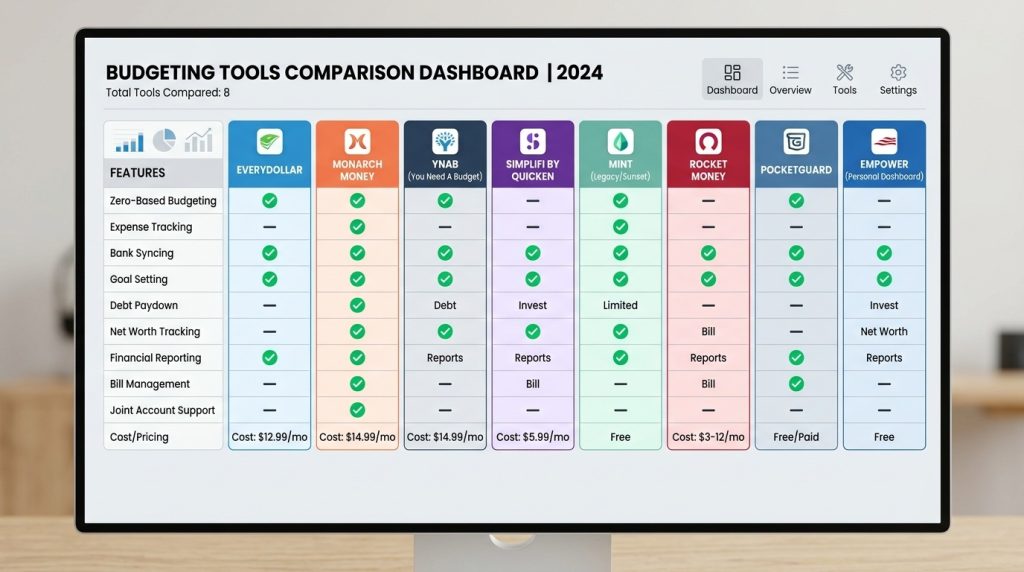
You can make a zero-based budget on a napkin. But tools make it easier. I have tested dozens. Here are the eight best options for 2026.
| Tool Name | Best For | Cost | Key Feature |
| YNAB | Debt Payoff | Paid | Focuses on “Money You Have” |
| EveryDollar | Beginners | Free/Paid | Simple, visual interface |
| Tiller | Spreadsheet Pros | Paid | Automates Google Sheets |
| Monarch Money | Families | Paid | Great multi-account sync |
| PocketGuard | Overspenders | Free/Paid | Shows “In My Pocket” cash |
| Goodbudget | Cash Lovers | Free/Paid | Digital envelope system |
| Empower | Wealth Building | Free | Tracks Net Worth |
| Excel/Google Sheets | DIY Types | Free | Total customization |
I personally use YNAB (You Need A Budget). It changed my life because it doesn’t let you budget money you haven’t earned yet. It forces you to deal with reality. If you want to start with something simpler, EveryDollar is fantastic. For more on the tech side, see my financial freedom roadmap.
10. Managing a Zero-Based Budget on a Variable Income

If you are a freelancer or business owner, a zero-based budget can feel scary. What if you don’t know your income? I use the “Hill and Valley” method. I save extra money during the “Hills” (high income months) to cover the “Valleys” (low income months).
In my budget, I have a category called “Next Month’s Buffer.” Anything extra I earn this month goes into that bucket. This allows me to budget with a fixed amount next month. It creates stability in an unstable world.
This is a vital money habit for the self employed. It stops you from overspending when you have a big month. If you are looking for ways to stabilize your income, check out best side hustles to start now. For advanced income strategies, see how to invest in real estate with no money.
11. Troubleshooting Your First 90 Days

Your first zero-based budget will probably fail. That is okay. It takes about three months to get the hang of it. I forgot my quarterly pest control bill in my first month. I overspent on groceries in my second month.
The key is to “Roll with the Punches.” In YNAB terminology, this means moving money from one category to cover another. If you spend $50 too much on gas, take it from your “Fun” category. The budget is a living thing. It should change as your life changes.
Don’t quit because it isn’t perfect. The goal is awareness, not perfection. By the third month, you will know your true spending habits. This is when the real wealth building begins. See my credit score improvement tips for how this discipline impacts your overall financial health.
12. Advanced Zero-Based Budgeting for Couples

Budgeting with a partner is the ultimate communication tool. In 2025, my spouse and I started a weekly “Money Minute.” We look at our zero-based budget together for fifteen minutes.
We discuss upcoming events and shared goals. This prevents the “Who spent $100 at Target?” arguments. We have shared categories for the house and individual “Blow Money” categories for personal fun. This preserves autonomy while maintaining shared goals.
Transparency is the secret to financial peace in a relationship. If you are struggling to get your partner on board, focus on the dreams, not the restrictions. For more on joint planning, see my financial freedom roadmap.
13. Summary of Zero-Based Budgeting Principles

A zero-based budget is a commitment to your future self. It is the process of deciding that your dreams are more important than your impulses. By giving every dollar a job, you reclaim your time and your freedom.
- Track your real take home pay.
- Prioritize the Four Walls.
- Use sinking funds for irregular costs.
- Zero out every single month.
- Review and adjust regularly.
In 2026, this system is more important than ever. With rising costs and economic uncertainty, you need a precise map. You have the tools. You have the plan. Now, you just need to start. Your path to being mortgage free and debt free starts with a single zero.
Frequently Asked Questions
Does a zero-based budget mean I have no money left?
No. It means your “Available to Budget” balance is zero. Every dollar is assigned to a category, including savings and investments. You still have money in the bank. You just have a plan for every cent of it. It is the ultimate form of managing your money.
Is zero-based budgeting hard for low income households?
It is actually more important for a low income. When margins are thin, every dollar must be efficient. A zero-based budget helps you find the small leaks that could be your emergency fund. Start small and focus on the Four Walls first. Check how to budget for beginners for a simple start.
Should I pay off debt or save for retirement first?
Always build a starter emergency fund of $1,000 to $2,000 first. Then, attack high interest debt like credit cards using your zero-based budget. Once the bad debt is gone, move to retirement and long term wealth building. Read how to get out of debt for a clear priority list.
How do I handle “found money” like a tax refund?
Treat a tax refund or bonus like a regular paycheck. Give every dollar a job immediately. I recommend putting 50% toward your biggest goal and 50% toward something fun. This keeps you motivated while making progress. See how to invest in real estate with no money for more windfall ideas.
Can I use the cash envelope system with a zero-based budget?
Yes. The cash envelope system is a physical version of a zero-based budget. It is great for categories like groceries or dining out where it is easy to overspend. When the cash is gone, you stop spending. It is a powerful way to build financial wellness.
Conclusion
Mastering the zero-based budget changed my life. It took me from a state of constant anxiety to a state of absolute confidence. In 2026, where every dollar counts, this system is your best defense against inflation and debt. By giving every dollar a job, you are telling your money what to do, instead of wondering where it went.
Don’t wait for a new month to start. Run your numbers tonight. See where your money is actually going. Every small adjustment is a step toward your financial goals. You have the power to create a life of financial peace. It all starts with the number zero.

James Mitchell is the founder and sole creator behind Logic and Liquidity. With a deep passion for both finance and interior design, James manages every aspect of the website—from writing in-depth blog posts to handling strategy, operations, and content creation. His mission is to help homeowners see their spaces through a financial lens, proving that great design is a smart investment.